
Next few months critical in bid to revive country's economy: Niti Aayog VC
He also noted that while early signs of economic recovery are encouraging, sustainability of this recovery will be key
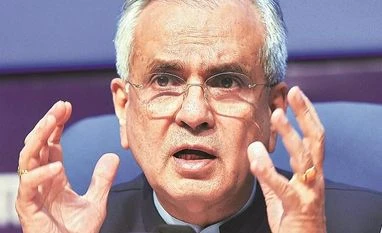 "Next few months critical in bid to revive country's economy: Niti Aayog VC")
premium
Explore Business Standard
He also noted that while early signs of economic recovery are encouraging, sustainability of this recovery will be key
The next few months will be "critical" for the country in the bid to revive economic activity and further fiscal measures may be warranted to ensure that recovery gathers pace, Niti Aayog Vice Chairman Rajiv Kumar said on Friday.
He also noted that while early signs of economic recovery are encouraging, sustainability of this recovery will be key.
"The 'next few months' will be critical for India as well in the bid to revive economic activity.
"... the downside risks are still very real. Further fiscal measures may be warranted to ensure that the recovery gathers pace and does not peter out," he wrote in Niti Aayog's newsletter 'arthNITI'.
In May, the government announced a nearly Rs 21 trillion stimulus package to help over the economic crisis induced by the coronavirus pandemic and subsequent lockdowns.
India's economy grew 4.2 per cent in 2019-20. For the current financial year, various global and domestic agencies have projected a sharp contraction of the domestic economy.
On a year-on-year basis, most of the high frequency indicators are still in negative territory, Kumar said, adding that the fiscal deficit is expected to widen significantly.
Yet, data for June seems to suggest there are some green shoots visible, he said.
The Niti Aayog Vice Chairman noted that a global economic contraction is on the cards, the magnitude of which is undergoing constant revision.
"The same is true for India. Economic activity was at a virtual standstill in April and May. And this was reflected in all high frequency indicators of the economy," he said.
Kumar also pointed out that India has taken several decisive steps apart from monetary and fiscal easing to boost the economy.
"An ambitious vision of an Aatmanirbhar Bharat has been laid out by the Prime Minister. Realising this vision will entail leveraging India's advantages relative to the world," he noted.
Further, Kumar said that countries are also taking on more and more debt as they announce stimulus packages to battle the economic crisis.
"With government debt levels at historic highs, and interest rates at historic lows, credit-driven growth is likely to be modest at best," he said.
However, Kumar said the price of gold indicates a flight to safe asset choices to protect wealth.
"As prices of gold continue to rise, we also need to watch out for inflation in asset prices relative to consumer prices, as the market is currently awash with liquidity.
"The world can ill afford a financial crisis on top of an economic one," he added.
Already subscribed? Log in
Subscribe to read the full story →

3 Months
₹300/Month
1 Year
₹225/Month
2 Years
₹162/Month
Renews automatically, cancel anytime

Over 30 premium stories daily, handpicked by our editors


News, Games, Cooking, Audio, Wirecutter & The Athletic
Digital replica of our daily newspaper — with options to read, save, and share


Insights on markets, finance, politics, tech, and more delivered to your inbox
In-depth market analysis & insights with access to The Smart Investor


Repository of articles and publications dating back to 1997
Uninterrupted reading experience with no advertisements


Access Business Standard across devices — mobile, tablet, or PC, via web or app
First Published: Aug 14 2020 | 7:52 PM IST

