4 min read Last Updated : May 15 2021 | 9:33 PM IST
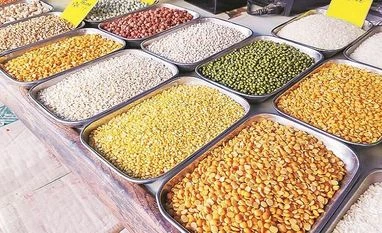
To keep retail prices from rising further, the central government on Saturday allowed free import of tur, urad and moong. The move, after a gap of three years, comes weeks before start of sowing for the kharif season.
Sources said imports of all these three types of pulses had been put under a non-restricted list as their retail prices had soared in the past few weeks due to low stock levels with traders. The import consignments have to be cleared before November 30 this year; no imports shall be allowed after that, according to an official notification.
Trade sources said this had been done to ensure that the domestic markets did not crash under the weight of imports before the new kharif harvest of tur, urad and moong started arriving in the market from late December and farmers got reasonable rates, above the minimum support price, (MSP) for their produce.
In the past few weeks, tur prices in retail markets have been over Rs 7,000 per quintal, which is almost Rs 1,000 more than its 2020-21 MSP of Rs 6,000 per quintal. Urad prices are ruling even higher, at around Rs 8,000 per quintal. The 2020-21 MSP for urad is Rs 6,000 per quintal. The market price of moong is also near its MSP of Rs 7,196 per quintal.
“Procurement of tur by state agencies is almost over and farmers aren’t left with much stock, while the urad crop is also exhausted. In case of moong, there is some stock with farmers from the summer harvest. Thus, the decision to open imports should not have much impact on the realisations of farmers,” a senior government official said.
He added that the official notification very clearly said imports of all the three types of pulses had to be completed by November 30. That is at least a month ahead of the time for fresh crop arrival.
“As regards concerns about impact on sowing sentiment ahead of the crop season, the price of pulses has fluctuated widely earlier too, but that has not impacted sowing. Instead, we have steadily produced more pulses in the past few years and our average harvest has risen from 15-16 tonnes annually in 2007-2008 to over 24 million tonnes in 2020-21, a jump of over 60 per cent,” the official further explained.
A section of the traders and exporters of pulses, meanwhile, welcomed the move, while others termed it as detrimental to the interest of farmers and processors.
Jitu Bheda, chairman of the Indian Pulses and Grains Association (IPGA) welcomed the Centre's decision to allow free import of pulses but said that the free import policy would enable traders to quickly import a minimum of 250,000 tonnes of tur, 150,000 tonnes of urad and 50,000-75,000 tonnes of moong beans primarily from Myanmar, Africa and the neighboring countries to make up for the shortage.
He said the government had acted promptly and taken an extremely progressive step by revising the import policy for tur, moong and urad from “restricted” to “free” with immediate effect.
"All consignments will have to arrive on or before November 30 and billing date for such imports should be October 31 or before. IPGA welcomes this move wholeheartedly as it has not only been done while keeping farmers’ interests in mind but will also help keep the prices of pulses in check. It’s a timely decision by the government, especially during the current challenging times," Bheda said.
But, some traders and processors said that allowing imports just ahead of the sowing season and at a time when pulses were fetching good prices could impact the sowing sentiment.

 "Ahead of kharif sowing season, govt allows free import of 3 types of pulses")











