Military planners have noted that their share of overall government expenditure shrank over the past two years from 13.15 per cent to 12.6 per cent, by the traditional basis of calculation, which excludes defence pensions.
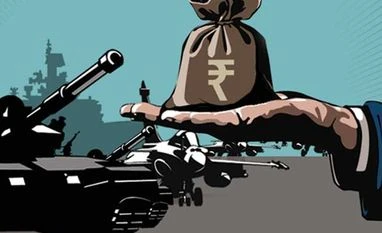
For the top brass, however, the key issue is: Which service - the army, navy or air force - is getting a larger slice of the pie? A Business Standard analysis of the Budget allocations shows over the past three years, the army's share has steadily grown.
With Washington wooing India as a key partner in its rebalance to the Indo-Pacific, it was expected the navy and air force, both equipment oriented services that are instruments of power projection, would expand their share.
The numbers belie that expectation. The army's share has grown from 46 per cent of the Budget in 2014, to 51 per cent in 2015, to 53 per cent this year. The navy's share - which strategic planners predicted would rise to 18 per cent of the defence Budget - has dropped from 16 per cent in 2014, to 15 per cent this year.
The air force, keenly focused on procuring the exorbitantly priced Rafale fighter from France, finds that its share dwindled from 23 per cent in 2014, to 22 per cent last year, to 21.5 per cent in this year's defence Budget.
Even so, the navy and air force, both a fraction of the size of the army, spend a much higher percentage of their money on new equipment. As evident, the army spends around 85 per cent of its allocation on revenue expenditure - which includes salaries, training, maintenance and running costs.
In contrast, the navy spends less than half its budget on running costs, leaving it with 54 per cent of its allocation for modernisation, like buying new warships and submarines. The air force will spend a similar percentage on capital procurement.
In real terms, the army will spend Rs 22,110 crore on new equipment this year, while the navy will spend Rs 20,715 crore. The air force, as always, will get the lion's share of the capital allocations - Rs 27,555 crore. These figures exaggerate the military's actual buying power because some 90 per cent of the procurement budget is pre-committed towards paying installments for equipment purchased in previous years. From this year's capital allocation of Rs 86,340 crore, less than Rs 10,000 crore will be available for new contracts.
Typically, a defence purchase involves a 15 per cent down payment in the year it is contracted, with the balance paid over five to seven years, or even longer, depending upon the delivery period. Rs 10,000 crore would allow the military to contract for about Rs 70,000 crore worth of new equipment over the coming year. This assumes, the military will not face again the perennial problem of a cash-strapped finance ministry putting a block on equipment procurement in the last quarter of a year.
Meanwhile, the army's manpower costs are increasingly unsustainable. Some 60 per cent of its overall allocation will be spent on salaries and there is little sign of change. The raising of a mountain strike corps and two armoured brigades continues, with the numbers set to rise beyond 1.2 million.
"We must have more boots on the ground to patrol thousands of kilometres of remote mountainous border", is the typical comment of an army general, responding to a question on whether India will follow the lead set by China, which just announced a reduction of 300,000 soldiers.
Even so, the army's capital allocation has prominently grown over the past two years, from only Rs 13,246 crore in 2014-15 to Rs 22,110 crore this year. Much of this will go on badly needed fire support, especially artillery guns, and helicopters - both armed and for mobility.

 "Army got greater share in Budget")


 Connect with us on WhatsApp