Arun Jaitley raise concerns over Rajya Sabha's control on GST bill
Finance Minister said he would discus the issue with Congress in hope of getting the bill passed
Press Trust of India New Delhi With the crucial GST Bill stuck in Rajya Sabha, Finance Minister Arun Jaitley Thursday questioned the extent to which the Upper House can be used to block economic decision-making and said the "weight" of directly elected house must always be maintained.
Jaitley, who in May last year stated that Indian democracy faced a serious challenge with an 'indirectly elected' Upper House questioning the wisdom of 'directly elected' Lok Sabha, today said he will again be speaking to the Congress on the GST bill.
"To what extent our Upper House is going to be used to block economic decision making... In Australia the debate is on, the UK has gone through this debate a while ago and Italy is having the same debate. Because ultimately the weight of a directly elected House will always have to be maintained," he said at a seminar here.
Opinion on a bicameral system of legislature world over has been sharply divided with some being of the opinion that a second chamber is essentially undemocratic as it can override the opinion of a directly elected House. Others however maintain that the Upper House provides for detailed scrutiny of bills which may have been rushed through in haste due to political compulsions by elected members.
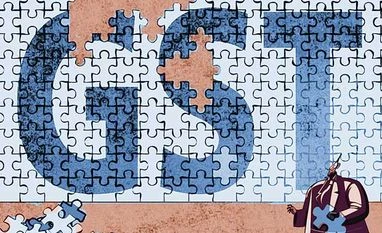
The Goods and Services Tax bill, which seeks to replace a slew of central and state levies with a uniform GST rate, was passed by Lok Sabha in May and is pending ratification by Rajya Sabha, where the ruling NDA does not have a majority.
Congress is opposing the bill in the current form, demanding a cap on GST rate be included in the Constitution Amendment Bill.
"It is now coming down really to one issue. The only opponent to GST is the Congress party. Curiously, the party which had sponsored the law in first instance, has some belated wisdom that you must have a Constitutional cap. Now that seems a little difficult," Jaitley said.
Finance Minister said he would be discussing the issue with the Congress in hope of getting the bill passed in the second half of Budget session, which begins on April 25.
"I am all for the idea of having a reasonable rate as far as GST is concerned which the GST Council will decide. But I hope with some consensus on that reasonable rate between two national parties, we are able to arrive at a more consensual approach," he said.

 "Arun Jaitley raise concerns over Rajya Sabha's control on GST bill")


 Connect with us on WhatsApp