Amid opposition from rich nations, India has called for inclusion of ‘therapeutics and diagnostics’ — testing and treatment of a disease — as part of the temporary patent waiver agreement that can pave the way for the future need to tackle any crisis.
Twenty months ago, India and South Africa had urged the World Trade Organisation (WTO) member nations to agree to temporarily waive some sections of Trade-Related Aspects of Intellectual Property Rights (TRIPS) to ramp up production of vaccines, therapeutics, and diagnostics to combat the Covid-19 pandemic. The draft agreement, however, falls short of the original proposal and includes only vaccines.
“In the course of my discussions, it has been indicated that many countries do not favour supporting what has been asked. Well, if it’s only vaccines that we are looking at providing, I think it's too late in the day for that,” the minister said, adding that it was unfortunate that the profits of the pharmaceutical behemoths prevail over global growth.
India and South Africa and 63 co-sponsors had initially made the TRIPS waiver proposal to help middle- and low-income nations get access to Covid-19 vaccines and drugs. However, the discussions reached a deadlock in the TRIPS Council — a body responsible for monitoring the operation of TRIPS agreement.
The minister said the draft text from these discussions did not reflect what India as a co-sponsor of the waiver proposal had envisaged. The commencement of text-based negotiations allowed the larger membership to engage in discussions on the texts. “I was really hopeful that the remaining concerns with this text would have been resolved and reconciled. For India, a consensus-based outcome is of paramount importance,” he said.
Goyal also said India had made several compromises to enable submission of a ‘clean’ document on the “Response to Pandemic” at the ministerial.
The compromises include the TRIPS automaticity clause, which was not accepted, extensive dilution of the language on intellectual property, and tech transfer, among others. “I hope that the flexibility that we have shown will pave the way for its acceptance and be replicated in other tracks for a successful MC-12,” he said.

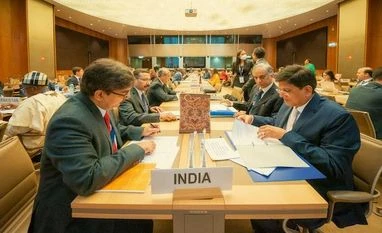 "At WTO MC12, India bats for test and treat strategy under TRIPS waiver")











