Bank and NBFC stocks seen cheering RBI's proposals on widening ownership

While questions remain, RBI panel's recommendations, if implemented, could result in structural changes for the sector
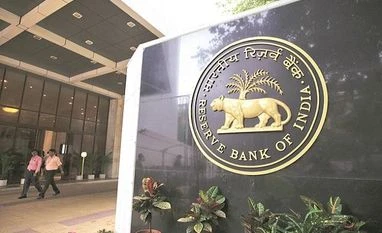
RBI, reserve bank of india
HDFC Bank and IndusInd Bank are the two prominent promoter-led banks, of which, promoters of IndusInd Bank have already placed a request to the RBI to increase their stake in the bank
Hamsini Karthik Mumbai
4 min read Last Updated : Nov 23 2020 | 12:03 AM IST
The report of the Reserve Bank of India (RBI) constituted Internal Working Group (IWG), reviewing extant ownership guidelines and corporate structure for Indian private sector banks, was a weekend bonanza for the Indian financial services firms.

Whether it was its recommendation to accommodate industrial houses in the banking sector, or the proposal to once again allow promoters of banks to hold up to 26 per cent stake or non-promoter investors to take upto 15 per cent stake, these are deep-rooted structural changes proposed by the IWG.

Suresh Ganapathy of Macquarie Capital terms these as bold recommendations, though he is extremely doubtful if they would see the light of day. He is not alone; even those at ICICI Securities say that acceptance of these recommendations is the key question. “Final acceptability rests with the RBI and being cognisant of prudential concerns there is no surety of the extent of dilution to these recommendations in the final guidelines,” they note.

Yet, despite the strong apprehensions, analysts expect stocks of banks and non-banking finance companies (NBFCs) to react positively to these suggestions.

Impact on banks

HDFC Bank and IndusInd Bank are the two prominent promoter-led banks, of which, promoters of IndusInd Bank have already placed a request to the RBI to increase their stake in the bank. IWG's recommendations are open for suggestions till January 15, 2021 and final guidelines may be out subsequently. Commenting on the proposals, Ashok Hinduja, Chairman, Hinduja Group of Companies (India), said, “It helps strengthen the institutional framework by ensuring the promoter responsibility with more skin in the game”. Analysts expect the IndusInd Bank stock to trade positive on Monday, given its promoters' intent.

Among non-promoter led banks, names such as Axis Bank, RBL Bank and YES Bank have roped in large private equity (PE) players this year – Bain Capital, Barring Capital and Tilden Park, respectively. “The proposed norms will increase our negotiating powers when we approach PEs and their willingness to cut bigger cheques should also go up,” said a CEO of a mid-sized bank. Among other prominent names, ICICI Bank, IDFC First Bank, Federal Bank and DCB Bank may also benefit, according to analysts.


NBFCs can become banks

Well-run NBFCs with asset size of over Rs 50,000 crore could be candidates for a banking license, as per the recommendations. Many top-tier NBFCs, even if backed by industrial houses, would fit the bill (see table) going by the proposal. While they have been eligible for banking license ever since 2016, the question is whether they would be second time lucky (or third, in case of Shriram group and Piramal Enterprises, when the former had proposed merger with erstwhile IDFC Bank). Moreover, Bajaj Finserv, L&T Finance or M&M Finance were contenders for banking license in 2012, though ultimately RBI chose IDFC and Bandhan for universal banking license. “Some NBFCs like L&T Finance and M&M Finance have completely reoriented since they didn’t get a license earlier. Whether they would want to once again reorient themselves and entail that cost, including reducing their promoters’ stake to 40 per cent needs to be seen,” said a research head of a foreign brokerage.

"A corporate house like L&T was not given a banking license. While rules can be black and white, fit and proper criteria and due diligence will remain a grey area,” Ganapathy spells out. Another head of research points out that when the topography of the sector has changed so much, the necessity to operate as a tightly regulated banking entity may not be relevant in the space. “Traditional lending business may go out of vogue and that’s already being demonstrated by fintechs. Ways have evolved to access low-cost capital; deposits aren't the primary option anymore,” he adds.

Therefore, while the IWG’s proposal is very forward-looking, given the changed dynamics of the lending business, opting one way or another would not be an easy decision to make any more.

One subscription. Two world-class reads.

Already subscribed? Log in

Subscribe to read the full story →
*Subscribe to Business Standard digital and get complimentary access to The New York Times

Smart Quarterly

₹900

3 Months

₹300/Month

SAVE 25%

Smart Essential

₹2,700

1 Year

₹225/Month

SAVE 46%
*Complimentary New York Times access for the 2nd year will be given after 12 months

Super Saver

₹3,900

2 Years

₹162/Month

Subscribe

Renews automatically, cancel anytime

Here’s what’s included in our digital subscription plans

Exclusive premium stories online

  • Over 30 premium stories daily, handpicked by our editors

Complimentary Access to The New York Times

  • News, Games, Cooking, Audio, Wirecutter & The Athletic

Business Standard Epaper

  • Digital replica of our daily newspaper — with options to read, save, and share

Curated Newsletters

  • Insights on markets, finance, politics, tech, and more delivered to your inbox

Market Analysis & Investment Insights

  • In-depth market analysis & insights with access to The Smart Investor

Archives

  • Repository of articles and publications dating back to 1997

Ad-free Reading

  • Uninterrupted reading experience with no advertisements

Seamless Access Across All Devices

  • Access Business Standard across devices — mobile, tablet, or PC, via web or app

Topics :RBIIndian banking sectorNBFC stocksbank stocks

Next Story



