BoE holds meetings with foreign banks in India; keen to resolve CCIL logjam

European regulators' decision affects more market segments than US norms
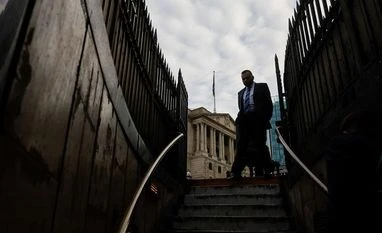
Bank of England
(Photo: Bloomberg)
Bhaskar Dutta Mumbai
3 min read Last Updated : Dec 11 2022 | 11:50 PM IST
In recent individual meetings with some foreign banks in India, the Bank of England has shown willingness to resolve the matter of de-recognition of the Clearing Corporation of India, sources told Business Standard.

“They (the BoE) seem quite keen to now reach out and resolve this. They are also very busy with Brexit. CCIL has to apply. If they apply, the BoE can see what regulation needs to be changed. If Parliament has to change some law, they can work on it etc. There are talks on multiple fronts,” a source said.

Following the decision of the European Securities and Markets Authority to de-recognise CCIL on October 31, the Bank of England announced a similar decision. The move is set to be implemented on May 1, 2023.

The decision by European regulators was taken following the Reserve Bank of India’s refusal to grant them auditing and inspection rights over CCIL, which is supervised by the Indian central bank.
 
CCIL hosts the trading platform for both sovereign bonds and overnight indexed swaps, which are the principal tools for hedging interest rate risk in India.

European banks with operations in India include BNP Paribas, Credit Agricole, Credit Suisse, Deutsche Bank and Societe Generale. UK-based banks such as Standard Chartered, HSBC and Barclays also play a large role in bond and swap trading.

An email sent to the Bank of England did not receive a response at the time of going to press. Emails sent to foreign banks, including Barclays, Standard Chartered and HSBC also did not receive responses.

A spokesperson from Standard Chartered Bank declined to comment on the matter.

“There have been one-on-one meetings with the Bank of England and some banks. There are ways to do it. There could be amendments to the MoU; they (CCIL) would need to apply and sit across the table,” a source said.

Speaking publicly about the matter for the first time, RBI Governor Shaktikanta Das had said on December 7 that overseas regulators must respect the credibility of Indian regulations and that the domestic market infrastructure was robust.

RBI Deputy Governor T Rabi Sankar also recently referred to the “unfortunate interference” in India’s regulatory architecture.

Sources said a key point of discussion in the recent meetings was that the European and UK regulatory restrictions included trading in cash instruments, which would have a major impact on bond and foreign exchange markets.

“Unfortunately, the European and British regulations do not even allow cash instruments. While the US CFTC (US Commodity Futures Trading Commission) may have de-recognised CCIL, the New York Fed has explicitly allowed cash instruments,” a source said.

“If cash instruments – forwards, spot and bonds – are affected, the market will be crippled. This would push European bank trading operations in India back by 10-15 years. The alternative mechanisms that were being floated would take around one-and-a-half years, if not more. It would almost be akin to a merger,” the source said.

According to sources, over the past few weeks, foreign banks and regulators had discussed the possibility of exploring mechanisms that could permit operations in case de-recognition of CCIL was implemented. These included setting up arrangements with Indian banks which handle custodian accounts for overseas flows.

US-based banks with operations in India, including Bank of America, Citibank and JP Morgan have sharply curtailed their activities in the OIS market since 2014 due to issues of recognition of CCIL as a Derivatives Clearing Organization with the US CFTC.


One subscription. Two world-class reads.

Already subscribed? Log in

Subscribe to read the full story →
*Subscribe to Business Standard digital and get complimentary access to The New York Times

Smart Quarterly

₹900

3 Months

₹300/Month

SAVE 25%

Smart Essential

₹2,700

1 Year

₹225/Month

SAVE 46%
*Complimentary New York Times access for the 2nd year will be given after 12 months

Super Saver

₹3,900

2 Years

₹162/Month

Subscribe

Renews automatically, cancel anytime

Here’s what’s included in our digital subscription plans

Exclusive premium stories online

  • Over 30 premium stories daily, handpicked by our editors

Complimentary Access to The New York Times

  • News, Games, Cooking, Audio, Wirecutter & The Athletic

Business Standard Epaper

  • Digital replica of our daily newspaper — with options to read, save, and share

Curated Newsletters

  • Insights on markets, finance, politics, tech, and more delivered to your inbox

Market Analysis & Investment Insights

  • In-depth market analysis & insights with access to The Smart Investor

Archives

  • Repository of articles and publications dating back to 1997

Ad-free Reading

  • Uninterrupted reading experience with no advertisements

Seamless Access Across All Devices

  • Access Business Standard across devices — mobile, tablet, or PC, via web or app

Topics :Bank of EnglandClearing corporationsEuropeeconomy

Next Story


