Bonds in India head for losses on PM Modi's near-record borrowing plan

The relentless supply of sovereign debt has been the biggest hurdle for Indian bonds this fiscal year, as pandemic relief efforts took precedence
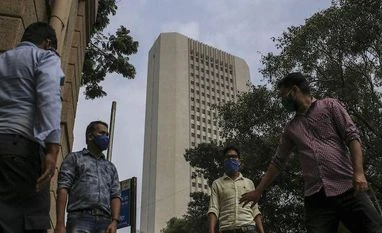
India's Finance ministry, sovereign bonds in foreign currencies, HSBC
The finance ministry may consider the issuance of $5-10 billion of sovereign bonds in foreign currencies, according to HSBC
Kartik Goyal | Bloomberg
4 min read Last Updated : Jan 27 2021 | 10:40 AM IST
India is poised to sell a near-record amount of debt in the coming fiscal year, pressuring a sovereign bond market that’s increasingly worried about support from the central bank.
 
Prime Minister Narendra Modi’s government may announce a gross borrowing plan of 10.6 trillion rupees ($145 billion) for the 12 months starting April in its budget announcement on Feb. 1, according to a median forecast of 15 analysts surveyed by Bloomberg News.

That’s less than the record 13.1 trillion rupees estimated for the current year, but 75% above the previous five years’ average. As a result, the 10-year sovereign bond yield may rise about 40 basis points from current levels to 6.30% by end-December, its first advance in three years, a separate survey showed.

“There will still be sizable funding requirements that will need to be financed from the market and that will pile pressure on bond yields,” said Himanshu Malik, a fixed-income strategist at HSBC Holdings Plc in Hong Kong. The “bond curve steepened quite sharply in 2020 and we expect the steepening pressure to return in 2021.”


The relentless supply of sovereign debt has been the biggest hurdle for Indian bonds this fiscal year, as pandemic relief efforts took precedence. With bond sales seen remaining elevated, signs of a recovery in the global economy as well as the Reserve Bank of India’s moves to drain excess cash are expected to add upward pressure on yields.

Case in point: Short-term bond yields surged, with yields on debt maturing in 2025 jumping 24 basis points this month, after the central bank drained 2 trillion rupees from the banking system at a higher-than-expected cutoff rate.

Traders see the central bank walking a tight rope in keeping long-end yields anchored to facilitate government borrowing, while restoring normal liquidity operations following a crash in short-end rates late last year.

“The bond yield curve could shift upwards with a flattening bias as front-end rates normalize to the more normal liquidity conditions,” said B. Prasanna, ICICI Bank Ltd.’s head of global markets, sales, trading and research. “The RBI is expected to prevent any large flare-up in long-end yields by continuing to use Operation Twist effectively.”

Some now expect the RBI to moderate its purchases in the next fiscal year. Bank of America Corp. estimates that the central bank may conduct open-market bond operations worth $21 billion in the next fiscal year, compared with an estimated $58 billion in the current year.


Still, no one expects the RBI to completely withdraw its support to the bond market.

“The Indian economy will still remain patchy for quite some time and it will definitely require the RBI to handhold until the wounds of Covid-19 are healed,” said Dhawal Dalal, Mumbai-based chief investment officer for fixed income at Edelweiss Asset Management Ltd.

Here are other bond market expectations from the Feb. 1 budget:

  • The finance ministry may consider the issuance of $5-10 billion of sovereign bonds in foreign currencies, according to HSBC
     
India hasn’t sold any foreign-currency sovereign bonds so far though it mooted the idea in 2019 to help narrow its budget deficit
 
  • India may announce a target a range for the fiscal deficit compared with its current practice of focusing on a point estimate, in line with the recommendation of the finance commission, according to ICICI Bank
     
Having a range for the fiscal deficit would be in line with the inflation targets for the monetary policy and would give policymakers more leeway to adjust spending
 
Economists surveyed by Bloomberg see stimulus spending, along with falling tax revenue, pushing India’s budget gap to about 8% of GDP in the current financial year ending March, more than double the 3.5% target
 
  • State Bank of India expects states to borrow nine trillion rupees in the next fiscal, in line with this year’s target

One subscription. Two world-class reads.

Already subscribed? Log in

Subscribe to read the full story →
*Subscribe to Business Standard digital and get complimentary access to The New York Times

Smart Quarterly

₹900

3 Months

₹300/Month

SAVE 25%

Smart Essential

₹2,700

1 Year

₹225/Month

SAVE 46%
*Complimentary New York Times access for the 2nd year will be given after 12 months

Super Saver

₹3,900

2 Years

₹162/Month

Subscribe

Renews automatically, cancel anytime

Here’s what’s included in our digital subscription plans

Exclusive premium stories online

  • Over 30 premium stories daily, handpicked by our editors

Complimentary Access to The New York Times

  • News, Games, Cooking, Audio, Wirecutter & The Athletic

Business Standard Epaper

  • Digital replica of our daily newspaper — with options to read, save, and share

Curated Newsletters

  • Insights on markets, finance, politics, tech, and more delivered to your inbox

Market Analysis & Investment Insights

  • In-depth market analysis & insights with access to The Smart Investor

Archives

  • Repository of articles and publications dating back to 1997

Ad-free Reading

  • Uninterrupted reading experience with no advertisements

Seamless Access Across All Devices

  • Access Business Standard across devices — mobile, tablet, or PC, via web or app

Topics :Indian EconomyIndian bondsDebtIndiaBudget 2021Union BudgetNarendra Modi

Next Story



