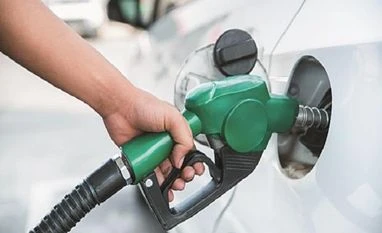
I just paid Rs 2,142 for 20 litres of petrol in Pune today, and I could not stop gawking at the fuel station meter. I vividly remember that I had swiped for Rs 1,600 for the same quantity of petrol not very long ago. But that’s the reality almost everywhere in India.
This has certainly made me cautious about spending money elsewhere. But as I was driving back home, a thought struck me. Wouldn’t those like labourers, construction workers and small farmers be in a far worse situation?
An average Indian, according to official statistics, spends merely Rs 1.3 lakh per year. And that is quite close to what they earn annually. That helps us determine the affordability of petrol in India vis-a-vis other countries.
At the average level, just one litre of petrol costs one-third of an average Indian’s daily income! Yes, a third of what one earns per day. People in most other Asian and emerging countries find petrol more affordable than an average Indian.
It’s hard to imagine how the poorest of Indians – those earning less than the average – would be handling the present level of petrol price. This is especially hard as the fuel is being taxed at a rate close to the customs duty on premium items like imported wine and high-end motorbikes.
It’s true that oil prices are rising globally — Brent crude futures were at $73.64 per barrel as of 15 July — and that is sure to push retail fuel prices. But a very high tax component adds more to the pump price than any other factor.
In the US, the tax on gasoline is close to 20 per cent, and in the UK it is 60 per cent. Compare that with what central and state governments in India effectively charge as tax: nearly 150 per cent on petrol and 125 per cent on diesel. This includes the value-added tax, or sales tax, levied by states (and a small component of pump dealer commission, too).
These fuels essentially run our economy. Food stuff arrives from the farm gate to markets, and then to retailers and our homes, on vehicles that run on diesel. It’s likewise for all consumer products that we use. Be it television sets or laptops or capital goods – there’s nearly nothing you can buy without burning fuel.
High fuel prices add to the cost of almost all goods and services we use, hurting the poorest the most. A recent report by the State Bank of India says that inflation rises by 0.5 percentage points if petrol prices rise by 10 per cent at your nearest pump.
Despite this, it is unreasonable to expect that the government will reduce tax on these two fuels. Why? Sample this: excise duties on petrol and diesel accounted for a whopping 28 per cent of the central government’s tax revenue last year. Which government would let such a bounty slip by, especially when the country’s economic recovery is fragile? Think about it.
And, unlike income tax and goods and services tax, which entail a collection cost, oil marketing companies just have to do a simple RTGS transaction to pay the fuel tax they collect from us to the government! The government then uses the money for a range of welfare schemes.

 "BS Number Wise: One litre petrol takes 30% of Indians' average daily income")












