Budget 2022: Farmers in need of a new deal, says ICRIER's Ashok Gulati

'Much of the agricultural policies in the past have focused on production', said Gulati
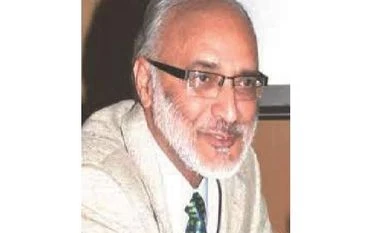
Ashok Gulati
Ashok Gulati, Infosys chair professor for agriculture at the Indian Council for Research on International Economic Relations (ICRIER)
Sanjeeb Mukherjee
4 min read Last Updated : Jan 24 2022 | 6:05 AM IST
The repeal of the farm Acts and the upcoming Assembly polls have put the spotlight on the agricultural and rural sectors in the impending Budget. Ashok Gulati, Infosys chair professor for agriculture at the Indian Council for Research on International Economic Relations (ICRIER), in an interview with Sanjeeb Mukherjee, looks at challenges arising from this. Edited excerpts.

Now that the Budget is round the corner, what are your expectations from it for the agricultural and rural sectors?

The biggest items in the Budget will be food and fertiliser subsidies. Those will extract a substantial portion of the Budget resources. That apart, I expect some expansion in the credit disbursement target and tweaking of the Agriculture Infrastructu­re Fund (AIF) to make it attr­active for investors. Overall, though, I don’t expect any revolutionary changes.

Do you think after the repeal of the three farm Acts, the government’s appetite for major reforms in the agricultural sector has gone down?

Much of the agricultural policies in the past have focused on production. The three now repealed Acts were refo­rms on the marketing side. The narrative was created that the laws were not in the interests of the farmers. Bec­ause of this they were withdrawn. Now that the laws have been repealed, any maj­or marketing reforms are out of the question. I don’t think any government will touch them in the years to come. If the demand for legislation on minimum support price (MSP) is accepted, it will be all the more regressive.

What according to you will be the trajectory of food and fertiliser subsidies in FY23, given that grain procurement is rising while global fertiliser prices are high?

It is unfortunate that instead of investing in research and development in agriculture and extension activities, which is the right way to go, our political system and democracy move by throwing more and more doles or subsidies.

It was in 2013 that the UPA government, in its last-ditch battle to appease consumers, enacted the National Food Security Act (NFSA) by giving them rice and wheat at Rs 3 and Rs 2 per kg, respectively, while the same rice costs the government now something around Rs 40 a kg. There is massive leakage as the system is geared towards that.

When the multidimensional poverty index shows that less than 30 per cent of the country’s population is poor, giving cheap food to almost 67 per cent of the people defies logic.

So either you reduce the coverage under the NFSA or raise the issue price (the rate at which grains are sold at ration shops) and link it to the economic cost of wheat and rice -- so that at least half the cost is recovered.

On top of that you have the fertiliser subsidies, the prices of which have gone up in international markets. It is a political hot potato because of the mood of the farming lobby in the government. Under both these heads, I feel there will be immense pressure on the government in the Budget. They may not do much for fertiliser subsidies, but in food subsidies there is scope for curtailing them.

I’m not saying that the farmers don’t need a new deal. But the instruments being adopted for them are old. The way to go is income support and direct benefit transfer and not market-distorting subsidies.

In the past few months we have seen a U-turn. From talking about the opening up of the markets, controls are being resorted to in checking a price rise in farm goods. How do you view this?

I won’t say a turnaround, but I feel this is where the government loses credibility. My problem is that the people who are running the show don’t understand how market economies function. At the drop of a hat, all sorts of controls are imposed. If with a temporary rise in prices you take steps like banning futures and imposing stock limits, it shows a hollowness in policy making.

Finally, do you think the trajectory of the Budget this year will be more populist than reformist, given that it will come weeks before the state elections and also with the Lok Sabha elections a little more than two years away?

Our elections are nothing but an exercise in populism. The fact of the matter is that it is our taxpayers’ money that is being thrown away as doles. All these should be banned; nobody should be allowed to give any freebies ahead of polls. They are a bribe.

One subscription. Two world-class reads.

Already subscribed? Log in

Subscribe to read the full story →
*Subscribe to Business Standard digital and get complimentary access to The New York Times

Smart Quarterly

₹900

3 Months

₹300/Month

SAVE 25%

Smart Essential

₹2,700

1 Year

₹225/Month

SAVE 46%
*Complimentary New York Times access for the 2nd year will be given after 12 months

Super Saver

₹3,900

2 Years

₹162/Month

Subscribe

Renews automatically, cancel anytime

Here’s what’s included in our digital subscription plans

Exclusive premium stories online

  • Over 30 premium stories daily, handpicked by our editors

Complimentary Access to The New York Times

  • News, Games, Cooking, Audio, Wirecutter & The Athletic

Business Standard Epaper

  • Digital replica of our daily newspaper — with options to read, save, and share

Curated Newsletters

  • Insights on markets, finance, politics, tech, and more delivered to your inbox

Market Analysis & Investment Insights

  • In-depth market analysis & insights with access to The Smart Investor

Archives

  • Repository of articles and publications dating back to 1997

Ad-free Reading

  • Uninterrupted reading experience with no advertisements

Seamless Access Across All Devices

  • Access Business Standard across devices — mobile, tablet, or PC, via web or app

Topics :Budget at a GlanceBudget SpeechBudget cycleBudget presentationBudget estimatesBudget 2022IcrierfarmersAgricultureRural IndiaNFSA

Next Story


