Exports have said the Budget should look at the issue of slow disbursal of tax refunds and uncertainty over major promotional schemes, blaming these issues along with currency volatility for a slowing growth.
In December, merchandise exports contracted for the fifth straight month as processed petroleum shipments saw lower receipts and a broad-based decline continued to plague all other major foreign exchange earning sectors. Shrinking by 1.8 per cent as of December, outbound trade has reduced in six of the first nine months of the fiscal year 2019-20 (FY20).
“With exporters’ claim for over five months still pending, liquidity has been wiped out and the process of finalising new contracts has been held up,” said Sharad Kumar Saraf, president of the Federation of Indian Export Organisations (FIEO). Last month, the government said over 83,500 exporters have already been paid refund of Integrated Goods and Services Tax (IGST), amounting to over Rs 1.12 trillion. It said refunds of only Rs 3,604 crore are pending with the Central Board of Indirect Taxes and Customs (CBIC).
A total of 6,421 exporters, constituting 3.4 per cent of the 185,000 registered exporters, have been identified as risky by the CBIC and, hence, red flagged. This includes eight “star exporters” as well who were not traceable at the addresses given by them. Star exporters are certified by the government on the basis of export performance and extended certain benefits, including customs clearance on self-certification basis and exemption from furnishing bank guarantee under certain schemes.
Exporters also hope the Budget will clear the confusion around the old Merchandise Exports from India Scheme (MEIS), which has been discontinued by the government as well as the uncertainty over the awaited Remission of Duties or Taxes on Export Products (RoDTEP) scheme. Introduced in 2015 under the Foreign Trade Policy, the mega MEIS was created out of a merger of five existing reward schemes. It incentivises merchandise exports of more than 8,000 items now and is the biggest of its kind. Exporters earn duty credits at fixed rates of 2 per cent, 3 per cent, and 5 per cent, depending upon the product and country. Officials said the new RoDTEP would also be based on this method but the rates are yet to be decided.
The Confederation of Indian Textile Industry has said rates should be immediately announced as exporters would need time to factor in the same while finalising new orders and making their transition to the new scheme smooth. For the garment and made-ups sector, the government has withdrawn MEIS benefits retrospectively from March 7, 2019, dealing a deadly blow to cash-starved exporters.
Apart from a fluctuation in commodities prices and especially crude oil, a major constituent of India’s exports, the currency volatility has also hit exports. While the value of the rupee has fallen, the depreciation was of a smaller magnitude of just 1 per cent, compared with 8 per cent last year during the same period, the data shows. This negatively affected Indian exports given the current environment of trade wars and the fact that most emerging market currencies also depreciated during this period, experts say.

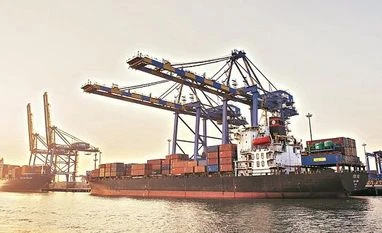 "Budget wishlist: Exporters seek clarity on slow tax refunds, key schemes")











