CAD to show improvement in Q4: Rangarajan
CAD widened to a historic high of 6.7% of GDP in December quarter to $32 billion on account of surge in oil and gold imports
Press Trust of India New Delhi
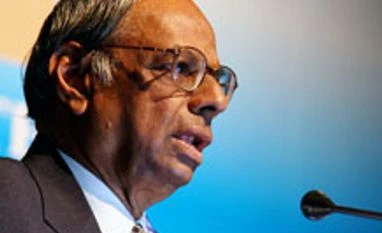
Having hit a record 6.7 per cent of gross domestic product (GDP) in December quarter, India’s current account deficit (CAD) was expected to show some improvement in the last quarter of this financial year on account of a likely uptick in exports, the Prime Minister’s Economic Advisory Council Chairman C Rangarajan said today.
The current financial year, he hoped, would end with a CAD of a little more than five per cent.
"The CAD (in December quarter) was higher than expected...But I believe CAD will come down during the fourth quarter (January-March). For the year as a whole, I expect CAD to be a little higher than five per cent,” Rangarajan said.
CAD widened to a historic high of 6.7 per cent of the GDP in December quarter, to $32 billion, on account of surge in oil and gold imports, besides weak exports. It was at $20 billion (4.4 per cent of GDP) in the corresponding quarter last financial year. CAD is the difference between inflow and outflow of foreign funds. Even at around five per cent, the CAD would be nearly double the mark of three per cent during 1991 — the year when India faced the foreign exchange crisis.
Crisil Principal Economist D K Joshi said the higher CAD could weaken the rupee. However, it is expected to come down as a whole, he said.
“The higher CAD increases vulnerability and dependence on foreign inflows. It causes lots of currency volatility which can weaken the rupee. Going ahead, we believe it will come down," Joshi said. On whether the current balance of payment (BoP) problem could be equated with the situation faced during 1991, he added,”that was a different problem.”
CRISIL in a note said government’s effort to revive the economy should be able to cover the widening CAD in the next financial year. “We believe that if the domestic reform momentum continues, India should be able to attract sufficient inflows to cover its CAD in the next financial year,” CRISIL said.

 "CAD to show improvement in Q4: Rangarajan")


 Connect with us on WhatsApp