The Centre had not closed the option of lowering the import duty on sugar and would explore it to boost supplies, as and when necessary, a senior official said.
He said a decision to this effect was taken at a recent meeting of the committee of secretaries, where it was decided to explore the option of lowering duties, whenever needed.
The government imposes a duty of almost 40 per cent on raw sugar imports. This was raised from 25 per cent in April 2015.
Sugar prices in retail markets have risen by Rs 4-7 per kg since April 2016 in anticipation of a shortfall in production due to last year's drought.
The output in the 2015-16 sugar crop season (October to September) is now estimated to be around 25.2 million tonnes, three million tonnes less than the previous year because of drought in the main growing regions of Maharashtra and Karnataka.
Production is expected to dip further as new crop planting in Maharashtra has been affected by water shortage. Industry players said in the 2016-17 crop year, sugar production in India might be only around 24 million tonnes.
"It is under these circumstances that the Centre wants to keep all its options of price control open," the official said.
He said not only rising prices of sugar but also those of edible oils and pulses were a cause of concern for the government, particularly during July-December, when most festivals occur.
"The PMO is regularly monitoring prices of essential commodities and also reviewing the steps needed to keep them under check," the official said.
He said the PMO was concerned about the prices of essential commodities, particularly in vulnerable areas prone to shortages such as Delhi.
A decision has also been made to engage the services of a private agency to monitor prices of essential commodities and evaluate production and supply trends.
States have been told to speed up action against hoarders and, if needed, joint action can be initiated by state and central agencies.
In a related development, Maharashtra has imposed stock-holding limits on sugar to check prices from flaring up.
According to an order issued late on Thursday, traders are prohibited from holding more than 500 tonnes of sugar. Maharashtra is India's biggest sugar producing state.
The Centre last month had empowered states to impose stock holding limits on sugar to prevent hoarding.
It had set a limit of 1,000 tonnes for traders in Kolkata and 500 tonnes for traders in all other parts of the country.
The Centre had also on May 23 notified an FRP (fair and remunerative price) of Rs 230 per quintal for sugarcane for the 2016-17 season, based on a 9.2 per cent recovery rate.
A Cabinet decision on this was taken in April, but a formal announcement was withheld because of ensuing state elections. SWEET TREND
Centre is monitoring prices of essential commodities, mainly edible oil, pulses and sugar, on a regular basis
States asked to take strict action against hoarders and black marketers in shortage-prone areas
Centre looking to augment existing storage capacities
Centre to hire independent agency to monitor prices, production and supply trend

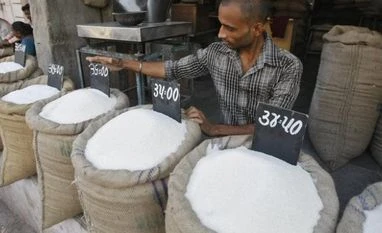 "Centre open to lowering import duty on sugar")


 Connect with us on WhatsApp