The Union government’s approval for solar-powered agriculture pumps last week is just a small part of its programme to provide power for agriculture.
While the Centre’s emphasis was on household electrification, power for agriculture had so far not been pushed with much enthusiasm. The reasons range from it being more capital-intensive to power supply for agriculture being mostly free or subsidised.
The Rural Electrification Corporation was set up in 1969 as a response to the “pressing exigencies” of severe drought by reducing the dependence of agriculture on monsoons, and instead “energising agricultural pump-sets for optimised irrigation”. The emphasis, however, has only been on household electrification.
The Deen Dayal Upadhyaya Gram Jyoti Yojana (DDUGJY) has provided Rs 1,250 crore for feeder segregation programmes.
States under the UDAY scheme of discom debt restructuring are required to put up separate power feeders for agriculture load. The progress on this parameter, however, is less than 40 per cent, said an official.
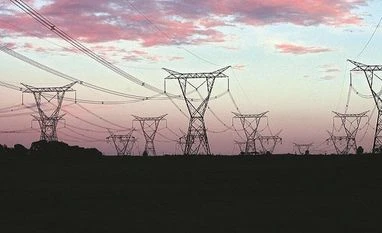
Segregation of feeders for domestic and agriculture loads allows the discom to monitor and regulate power consumption. It also prevents the misuse of free electricity for agriculture by fixing a time for supplying power.
Under the guidelines set by the Centre, a separate agriculture feeder is required to be put up if the agriculture load is more than 30 per cent, said an official, adding that the supply of power for agriculture was not as good as that for industrial and domestic usage.
“In states with high agriculture (power) consumption, un-metered connections, free or nominal agriculture tariffs leading to depleting water tables, it makes sense to have separate rural feeders exclusively for agriculture. Initial benefits may differ from state to state,” said Debasish Mishra, leader, energy, resources and industrial products, at Deloitte Touche Tohmatsu in India.
Madhya Pradesh, among the first few states to have separate agriculture feeder, has about 2.7 million permanent agriculture connections and about 200,000 seasonal connections. “Increased power supply through this mechanism has helped the state to improve agriculture output,” said Sanjay Kumar Shukla, managing director, MP Power Management Corporation, the holding company for the state's three distribution companies. He said the discoms ensure at least 10-hour supply for agriculture in the state and separate feeders help better management of power supply.
West Bengal, however, has a different approach for managing power supply to agriculture though it is not a signatory to the UDAY programme. “We have the same feeder for all rural connections, including agriculture. They are metered and have different tariffs,” said Sunil Kumar Gupta, additional chief secretary, power, West Bengal.
Though the Centre is not pushing states for providing power for agriculture, it is emphasising on feeder segregation to ensure 24X7 power supply for domestic use and adequate pre-determined power supply for agriculture, said the official quoted earlier.
Power to pump in water for irrigation in most areas, is still dependent on privately operated diesel gensets. Operators in Bihar, for instance, charge farmers Rs 100-Rs 120 for an hour of water supply. The state is turning its focus on power for irrigation. Pratyaya Amrit, Bihar’s principal secretary, power, said putting up 1,312 electricity supply feeders to meet agriculture load is the next big task. “We want to ensure six to eight hours’ uninterrupted power supply for agriculture by December 2019. This will help deal with drought,” he says.
In Gujarat, there is a thin line separating urban and rural consumption. “Rural is semi-urban there, so non-domestic power in villages is for both agriculture and non-agriculture commercial demand. Creating separate feeders, therefore, makes more sense there,” said an industry expert who did not want to be quoted.
For states, the challenge is to sustain the business. Both financial and technical losses will go up if the demand for power for agriculture goes up without adequate reimbursements. The gap between the average cost of supply and the average revenue realised could go up because the state governments declare subsidy, but do not pay. Doubling and creating two lines, in fact, is a sub-optimal solution. Benefit needs to be in proportion to investment.
Under the DDUGJY for rural electrification and the Pradhan Mantri Sahaj Bijli Yojana (Saubhagya), the Centre has pushed for providing electricity to households, resulting in all states, barring Chhattisgarh and Rajasthan, reporting electrification of all rural households. The focus, however, has been on domestic connections and not power for agricultural purposes.