Chabahar Port to help India circumvent Pakistan
Arijit Paladhi New Delhi On May 6, India and Iran signed a memorandum of understanding to develop Chabahar Port in Iran. Located on the confluence of the Indian Ocean and the Sea of Oman in southeastern Iran, it provides India access to Afghanistan, Central Asia and beyond. The agreement entails an investment of $85.21 million from India to construct a container terminal and a multi-purpose cargo terminal.
The formalisation of the agreement, presided over by Union Road Transport & Highways and Shipping Minister Nitin Gadkari and Iranian President Hassan Rouhani, was long overdue. While the construction of Chabahar Port augurs well for India and Iran, opening the trade routes to Afghanistan and Central Asia will also bolster economic ties with other nations. Moreover, the trade route reduces India's dependence on Pakistan, a volatile neighbour, for trade with Afghanistan.
The deal in many ways is also a natural progression of India's long-standing relationship with Iran. India's history has been heavily influenced by the Mughal rule - with its West Asian provenance - and it shares cultural ties with the country. Over the years, as India-Pakistan relationship descended into internecine wars and prolonged periods of avowed mistrust, Iran's relationship with India has managed to retain diplomatic pragmatism and strategic partnership, at least on paper.
"We can trace linguistic, cultural and even culinary similarities between the two nations. In contemporary times, however, we have not been too close politically. While significant joint ventures with Iran had been carried out during the Shah's times, it gave way to a lull as Iran grappled with its internal turmoil post-revolution," says Lalit Mansingh, former foreign secretary, Ambassador to the US and the high commissioner to the United Kingdom.
Iran was India's second-largest supplier of crude oil up until 2006 but it dropped to number seven by the end of 2013-14. Although India has reduced its oil imports from Iran, it has continued to maintain good relations with the West Asian nation, which has been reeling under economic sanctions imposed by the US and European Union.
There are other factors at play too in India's interest in Chabahar Port. One is that China recently won the right to operate Pakistan's Gwadar Port, which is believed to have strong military possibilities. Chinese President Xi Jinping's two-day visit to Pakistan last month yielded a $46 billion infrastructure investment promise. Pakistan's Gwadar Port, around 70 km east of Chabahar, was developed by China Harbour Engineering Company, with the Port of Singapore Authority as a minority partner. To counter the ubiquitous Chinese influence in infrastructure development in the neighbourhood, Chabahar's development provides a necessary route.
"With a promised investment of over $40 billion, China will require return on investments on the infrastructure that it will create. The infrastructure's management, be it the port, road or rail, by Chinese would need pragmatism and that dictates that India be allowed access. In case it is not, India will still have access to Afghanistan, Central Asia and the Caucasus through Chabahar," says Mansingh.
Pakistan has restricted the movement of Indian goods to land-locked Afghanistan, hampering trade relations between the two countries. The Afghanistan-Pakistan Trade and Transit Agreement allows Afghan trucks to carry cargo to Pakistan ports and the Wagah border but the trucks have to go back empty. This increases the cost of goods.
"Chabahar's development will reduce costs by almost a third and increase the potential transaction value between India, Afghanistan and Central Asia. Moreover, by circumventing Pakistan's current hold on access to Afghanistan, India's geo-strategic sway will be further enhanced," says Brigadier (retd) Rumel Dahiya, deputy director general at the Institute for Defence Studies and Analyses.
Chabahar's development will also render worthless Pakistan's fervent refusal to allow India-Afghanistan trade through its territory. Afghanistan's nodal location provides it the unique ability to provide access to South, Central and West Asia. According to the US Geological Survey, Afghanistan is believed to be sitting on a geological gold mine containing around 60 million tonnes of copper, 2.2 billion tonnes of iron ore and 1.4 million tonnes of rare earth elements. That gives Afghanistan a unique opportunity to become the hub of economic activity in the region. There will be a need for capital-rich countries to step in and help extract minerals. India has already committed to an investment of over $11 billion to develop the iron-ore rich Hajigak mines.
"India's potential investment will necessitate developing the necessary infrastructure like roads and railways for the evacuation of iron ore. The port's development will be an asset to India's investment for evacuation," says Mansingh.

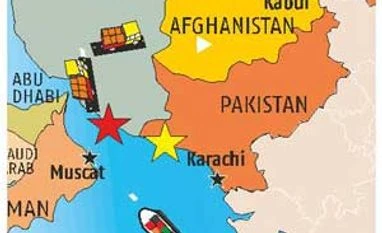 "Chabahar Port to help India circumvent Pakistan")


 Connect with us on WhatsApp