Home / Economy / News / Congress' NYAY not a UBI or dole, but a poverty alleviation scheme: Rajan
Congress' NYAY not a UBI or dole, but a poverty alleviation scheme: Rajan
Rajan was among those who advised the Congress on its scheme guaranteeing a minimum annual income of Rs 72,000 to 20 per cent of India's poorest families.
premium
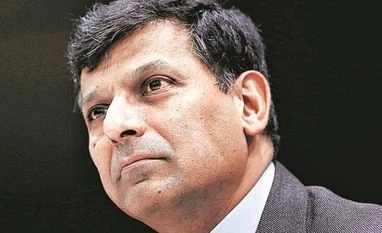
Former Reserve Bank of India (RBI) governor Raghuram Rajan.
3 min read Last Updated : Apr 10 2019 | 2:41 AM IST
Former Reserve Bank of India governor Raghuram Rajan has defended the Congress Party’s pre-election proposal NYAY as a poverty alleviation programme. He was speaking on Monday at the University of Toronto’s Rotman School of Management at an event to promote his latest book, The Third Pillar: How Markets And The State Leave The Community Behind.
Rajan was among those who advised the Congress on its scheme guaranteeing a minimum annual income of Rs 72,000 to 20 per cent of India’s poorest families. Answering a question from Business Standard in Toronto, Rajan said, “It’s not Universal Basic Income, which means giving a large section of the population enough to live on comfortably for the rest of their lives, nor is it intended as a dole to keep people in unemployment. It’s meant as poverty alleviation, and presumably what that means is it’s very targeted.”
However, the former RBI governor disclaimed any knowledge of the details of how the NYAY scheme could be structured or funded. “I think what the Congress has said is that post-election it will set up a committee to look at the details of this programme. What the Congress Party has suggested is that it will have Direct Income Transfers to the bottom 20%. I don’t want to at this point say that I know more about what is intended than what is out there because I don’t,” Rajan explained.
He noted that the NYAY programme, which is estimated to entail an additional expenditure of Rs 3.6 lakh crore, would need to be tailored to India’s fiscal situation. “Obviously any program has to be fiscally responsible because you can’t spend more than you can afford and I understand that they will figure out a way to actually finance it. I don’t know what is ultimately intended but that’s what I understand it’s meant to be,” Rajan said.
Rajan, who returned to his teaching position at the University of Chicago after his term as RBI governor ended in September 2016, is now the Katherine Dusak Miller Distinguished Service Professor of Finance at the university’s Booth School of Business. Talking about economic redistribution policies in general, he said, “Redistribution as a permanent solution accepts the fact that people are not capable of doing better jobs and to that extent I worry that we’re not tackling the harder problem. The ideal form of getting value to people who are lower on the income scale is really preparing them for the new economy. The rest seems to be a palliative as of now.”
Touching on another issue that is also topical and relevant to India, Rajan pointed to the power wielded by the world’s biggest technology firms. “Again and again, probably with a periodicity of about 20 years, there are public, popular movements to break up the power of the latest threat, the latest source of concentrated power. Today that is Big Tech. You see a large movement now emerging against Big Tech because the fear is that a few platforms now control so much data, control so much power – the idea that (Facebook’s CEO) Mark Zuckerberg sitting in his study and figuring out what a billion people see is something that is alarming and therefore causes this kind of reaction.”
The Third Pillar is published in Canada by Penguin Random House. The event at the Rotman School of Management was hosted by the India Innovation Institute at the University of Toronto.





