The growth of India’s eight key infrastructure segments reached a 32-month high of 6.8 per cent in March compared to a year earlier, mainly due to a low base, the data released by the commerce and industry ministry showed.
The core sector output had contracted 37.9 per cent in April last year, with the imposition of a nationwide lockdown. While the pace of contraction declined in the subsequent months, positive growth was seen only in December and January. In February, it contracted 3.8 per cent after mild growth in the previous months.
The cumulative growth during April-March (2020-21) was 7 per cent.
Experts said a sharp growth in March should be interpreted with caution and the trend will continue to be the same over the next two months.
“The March, April, and May growth numbers for the core sector and industrial growth were expected to be high and misleading as they come on the back of sharp declines registered last year. March was just the beginning of the lockdown, which pushed back economic activity after which there were even sharper declines,” said Madan Sabnavis, chief economist at Care Ratings.
Out of the eight sectors, steel, cement, electricity, and natural gas witnessed double-digit growth in March. A closer look at the data shows that steel and cement output also declined sharply in March as compared to a year earlier. The sharp rise to some extent can be attributed to the base effect as the government imposed a nationwide lockdown in the last week of March 2020.
“However, also the end-of-the-year phenomenon of infra projects being on track did provide impetus to cement and steel in particular. States and the Centre have been expediting their capex, which gets reflected in these numbers,” Sabnavis said.
The remaining sectors — coal, crude oil, fertilizer, and refinery products — are yet to get back to last year’s level.
Experts said despite localised lockdown amid a second wave, core sectors will continue to grow sharply in April, mainly driven by a base effect.
“We have observed a slackening in the sequential momentum in April in electricity demand, vehicle registrations, and generation of GST e-way bills, revealing the impact of the recent surge in Covid infections and localised restrictions. For instance, after a year-on-year expansion of 48 per cent in electricity demand at an all-India level during April 1-9 on the low base, the pace moderated to 36 per cent during April 10-25,” said Aditi Nayar, chief economist at ICRA.

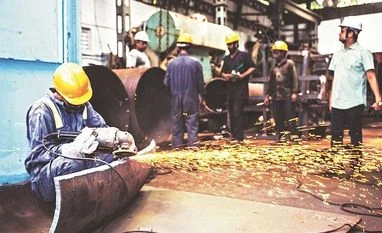 "Core sector output up 6.8% in March, hits 32-month high on low base")












 Connect with us on WhatsApp