Defence ministry plans standard price lists for public sector undertakings

The ministry has decided that, in the name of indigenisation, it is paying unreasonably more for such equipment
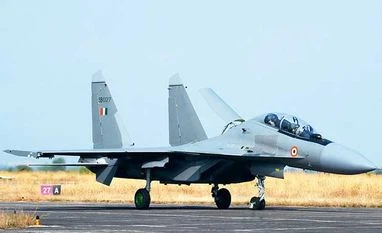
Sukhoi-30
Ajai Shukla New Delhi
Last Updated : Jul 18 2018 | 6:28 AM IST
The defence ministry has traditionally bestowed lucrative contracts upon defence public sector undertakings (DPSUs) and ordnance factories (OFs) without competitive tendering.  

Now, however, it is taking steps to make them reduce prices. A senior defence ministry official says DPSUs and OFs could soon be ordered to make public a price list of the equipment and weaponry they build. They would be required to hold those prices for a specified period and then raise these by only a reasonable amount. If the military demands a deviation from the baseline standard the DPSU or OF has priced, the cost of doing so would be added to the standard price.

This follows Defence Minister Nirmala Sitharaman’s statement on Friday that a committee of the ministry is examining (she said a report is expected within 60 days) why equipment from the defence public sector is costlier.

The ministry has decided that, in the name of indigenisatidefence PSUs, indigenous weapons, make in india, india made weapons, defence ministry, defence sector, DPSU, public sector defence companies, Nirmala Sitharamanon, it is paying unreasonably more for such equipment.

A standard price list would reveal that each Sukhoi-30 MKI fighter built in Russia costs the Indian Air Force (IAF) about  Rs 3.3 billion, while Hindustan Aeronautics (HAL) builds the same fighter in Nashik for  Rs 4.17 billion – 26 per cent costlier. Also, that Mazagon Dock Ltd, Mumbai, (MDL) is building six Scorpene submarines at a significant mark-up from the cost of the same submarine built in France.

And, as reported by Business Standard on Monday (Frigate purchase from Russia hit by high cost of warship building) two Krivak-III frigates planned to be built at Goa Shipyard Ltd will cost the navy far more than two identical frigates built in Russia.

Sitharaman said the IAF has specifically asked for the costing of Tejas fighters to be examined. HAL charged the IAF about  Rs 1.16 billion for each of the first 20 Tejas fighters it ordered in 2006. The price rose to  Rs 1.62 billion for the next 20 HAL would build. For the admittedly more sophisticated Tejas Mark-1A, tendered last December, HAL is pegging the price at over  Rs 4 billion each.


A senior ministry official complains that each time a DPSU or OF quotes a price, years of protracted negotiation follow. “It is bizarre that the ministry spends years negotiating with itself. Having standard prices would eliminate this nonsense,” he says. 

However, reducing of prices might not be easy, say defence industry experts. It is globally well-known in the trade that buying weaponry over-the-counter from large international 'original equipment manufacturers' (OEMs) is invariably cheaper than building the same equipment in the buyer country. That is because, the OEM has already set up a production line and partially or completely amortised the development costs. The buyer country would additionally have to pay for technology transfer, establishing a production line, trans-shipping raw materials and the time and effort needed to establish production.


The even more expensive path is to design and develop a platform indigenously. That requires expensive research and development, in addition to production line costs. However, indigenous development often works out cheaper in the long term, since it equips a country to sustain the platform through its service life-span. The latter involves costs like spares, maintenance, training aids and simulators, overhauls and mid-life upgrades.

One subscription. Two world-class reads.

Already subscribed? Log in

Subscribe to read the full story →
*Subscribe to Business Standard digital and get complimentary access to The New York Times

Smart Quarterly

₹900

3 Months

₹300/Month

SAVE 25%

Smart Essential

₹2,700

1 Year

₹225/Month

SAVE 46%
*Complimentary New York Times access for the 2nd year will be given after 12 months

Super Saver

₹3,900

2 Years

₹162/Month

Subscribe

Renews automatically, cancel anytime

Here’s what’s included in our digital subscription plans

Exclusive premium stories online

  • Over 30 premium stories daily, handpicked by our editors

Complimentary Access to The New York Times

  • News, Games, Cooking, Audio, Wirecutter & The Athletic

Business Standard Epaper

  • Digital replica of our daily newspaper — with options to read, save, and share

Curated Newsletters

  • Insights on markets, finance, politics, tech, and more delivered to your inbox

Market Analysis & Investment Insights

  • In-depth market analysis & insights with access to The Smart Investor

Archives

  • Repository of articles and publications dating back to 1997

Ad-free Reading

  • Uninterrupted reading experience with no advertisements

Seamless Access Across All Devices

  • Access Business Standard across devices — mobile, tablet, or PC, via web or app

Next Story



