Dismantling the Food Corporation of India (FCI), without dismantling the minimum selling price (MSP)-backed agricultural economy would be a disaster, said a former FCI official.
Under the current architecture of open-ended procurement, FCI and state agencies acquire grain at government-announced MSP, which is stored in state-owned or hired godowns, from there it is channeled to the public distribution system (PDS) and also used for meeting the requirements of buffer stock and welfare programmes.
The problem with dismantling FCI, says Alok Sinha, a former head of FCI, is that "if a marketable surplus of 600 lakh tonnes still has to be procured at MSP, then who is going to procure, store and distribute it?"
Some of the proposals to restructure FCI involve trifurcating the organisation into independent entities dealing with procurement, storage and distribution, and completely decentralising operations to the states.
Biraj Pantaik, principal adviser to the food commissioner appointed by the Supreme Court, said the focus of this exercise should be to completely decentralise operations. "The responsibility for procurement, storage and distribution of food grains should be left to the states. FCI should act as an enabler focusing on three functions: managing the central pool, buffer stock management and price stabilisation," he added.
Decentralising will mean grain surplus states will sell to deficient states. Currently, while open-ended procurement applies to the whole country it is largely carried out in a few states. Punjab, Haryana, Chhattisgarh and Telangana account for 70 per cent of the total rice procurement. The first two along with Madhya Pradesh account for 90 per cent of the total wheat procurement.
However, Sinha questioned the viability of the move. "Under the current system, when food grains are transported from surplus states like Punjab to deficient states like Bihar and West Bengal, FCI is in charge of the coordination. If operations are decentralised or if FCI is broken into three separate entities, who will be responsible for coordinating activities across states and settling disputes that may arise? Additionally, as the railways do not take responsibility, who is liable in case of theft?" Sinha pointed out.
One proposal, which Sinha said might not face much opposition, was to lower FCI's holding costs. Currently, FCI maintains buffer stocks that far exceed the prescribed limits, adding to its holding costs, which account for a significant portion of total costs. So even though FCI borrows from a consortium of banks at low interest rates, it does translate into a high interest burden.
The mismatch between grain inflow and outflow led Sinha to argue that "rather than persisting with the current system of maintaining stocks in multiples of the buffer stock limit, it might be prudent to have a mechanism for automatic offtake of food grains, say, at two times the buffer limits, over which stocks could be released directly into the market".
As the National Food Security Act (NFSA) and the PDS are intricately linked to the functioning of FCI, reforming it will invariably impact the way the current food subsidy regime operates. The PDS, which involves a network of over 480,000 fair price shops, serves as a conduit through which grain is sold at subsidised prices. "The larger is issue is whether reforming the FCI is the first step in doing away with the current food management system," Pantaik said.
Ashok Gulati, former head of the Commission for Agricultural Costs and Prices (CACP) and a member of a new committee set up by the government to suggest ways to restructure FCI, has in the past argued that employment generation programmes and income transfer programmes should over time replace direct food distribution programmes for the poor such as through the PDS.
While there is merit in the argument that a shift to cash transfers will lead to less leakage, there are legitimate concerns. A core issue is that of identifying the poor. While the Unique Identity (UID) scheme does provide an identity, it does not reveal whether the person is poor. The actual identification is done by the below-the-poverty line (BPL) census, which is fraught with problems of inclusion and exclusion. According to the National Sample Survey Organisation (NSSO) data, in 2004-5 half of the poorest households belonging to the bottom quintile of the monthly per capita expenditure distribution did not have BPL cards.
Additionally, rolling out the complementary banking infrastructure has not happened till date, although going by signals from Prime Minister Narendra Modi and the Reserve Bank of India (RBI), progress may be made on these issues. Furthermore, as prices of commodities vary from place to place, determining the exact amount of cash will be a complicated exercise.
Interestingly, the central government recently asked state governments to avoid giving bonuses over the announced MSP on the grounds that it distorted markets and cultivation patterns and increased the subsidy burden.

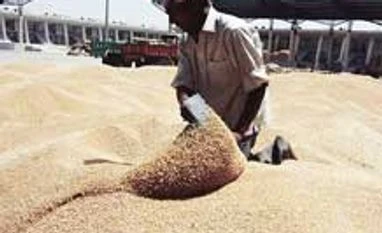 "FCI cannot be restructured in isolation")


 Connect with us on WhatsApp