Petrol and diesel could have been cheaper by around Rs 4 and Rs 2 a litre, respectively, than what they are, had the oil marketing companies (OMCs) kept their marketing margins at yearly-average levels, a Business Standard analysis of petroleum data shows. From its peak on October 3, price of Brent crude has nosedived 23 per cent, but OMCs in India seem to be in no mood to pass on its benefits to fuel consumers for now.
According to the data, India's state-run fuel majors are earning a near-record margin of around Rs 6 on the sale of a litre of petrol and around Rs 4.8 on diesel. The average margin OMCs made on both fuels in the last year stands at around Rs 2.6-2.8 per litre.
These are gross marketing margins realised in retail fuel sale in Delhi for Indian Oil Corporation, obtained from the price build-up data. Market analysts put the petrol marketing margins in the range of Rs 5.4-5.9, while that on diesel in the range Rs 4.3-4.5 per litre sold.
Net margins obtained after subtracting marketing and transport costs are not available.
In the period when Brent crude fell 23 per cent, retail price of petrol dropped only by nine per cent from Rs 84 a litre to Rs 76.38 a litre on November 20, while that of diesel by 5.5 per cent from Rs 75.45 to Rs 71.27 a litre in Delhi, reflecting that full impact of Brent fall was not passed on to consumers.
These bumper margins come despite the fact that all the three state-run OMCs -- IOCL, HPCL and BPCL -- had absorbed Re 1 a litre each on prices of petrol and diesel on a directive from the finance ministry, after Brent crude had crossed $80 a barrel.
The absorption -- a hit on their profits -- was expected to have an annual loss of Rs 45 billion for the companies during the current financial year. The record margins now would cover up the loss, experts told Business Standard.
"Companies may be making up for the losses of the Re 1 absorption. In addition to this, they may also be creating a cushion for themselves looking into the upcoming election season, as they may not be able to hike prices like the last time," said an industry analyst.
They also said higher margins would improve the health of OMCs, fortify their balance sheets to some extent, and potentially increase their dividend to the government. This should also aid OMCs in off-setting the inventory loss likely this quarter.
An OMC official, however, did not reveal the current marketing margins, and said oil companies continued to absorb Re 1 on fuel prices. He said a number of unforeseen factors affect marketing margins.
The retail price of petrol and diesel is benchmarked to cost and freight price (C&F) for a particular petroleum product. The C&F price (in $) is different for petrol and diesel. For petrol, the C&F price as on November 19 was $71.2 a barrel, which translates into Rs 32.5 a litre.
On the same day, the OMCs (represented by IOCL) charged Rs 38.6 a litre to retail outlets. The difference roughly represents the gross marketing margin which OMCs earn on petrol was at Rs 6.1 a litre. After the application of excise duty, state taxes and dealer's selling commission, petrol costs Rs 76.5 a litre in Delhi, taking the margin at eight per cent of the consumer price.
In case of diesel, the C&F price as on November 19 was $87.1 a barrel, which translated into Rs 39.7 a litre. The OMCs sold this litre of diesel to dealers at Rs 44.5 a litre, making a marketing margin of nearly Rs 4.8 a litre.

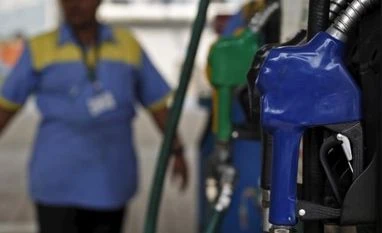 "Feeling the fuel cost pinch? Here's why petrol should be cheaper by Rs 4")











