India has mandated that global aircraft makers such as Lockheed Martin and Boeing get approvals of their governments to transfer technology and build jets with a local partner in India, if they are to bid for the country’s single-engine fighter requirement.
“The product which I want to buy, I want it to be made in India. Export to a third nation is an additional bonus. If someone wants to shift a facility to India it’s their choice, or they wants to assemble a new one. I am no way concerned with it,” said Defence Minister Manohar Parrikar after inaugurating the biennial Aero India show on Tuesday.
“If they’re proposing something, their government has to give them in-principle approval so that they can quote it to me. If something is not given or someone has not given it to them, then they cannot give a quote to me,” he said, but did not clarify whether a request for proposal has been issued. Parrikar was responding to queries on US President Donald Trump’s push for Make in America, to revive US manufacturing and generate local jobs.
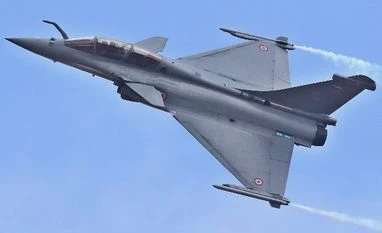
In October, India floated a request for information to global jet makers to partner with Indian companies and jointly bid to sell single-engine fighters for the Indian Air Force. The contest is different from the 126 medium multi-role combat aircraft, which was finalised with a 36-plane order from France’s Rafale, which will begin delivery from September 2019.
Lockheed Martin has offered to transfer its Fort Worth production line to India and make the latest Block-70 of F-16 fighters. Saab, which makes the Gripen fighter, has not only offered to help with Mark-1 and Mark-2 of India’s light combat aircraft Tejas, but also co-develop the advanced medium combat aircraft, which the Defence Research and Development Organisation plans to develop.
Independently, the Indian Navy has floated a tender to supply and produce 57 twin-engine carrier-borne fighters, for which Boeing has expressed interest to participate with its F-18 twin-engine planes.
It opted to buy from the global market after it publicly rejected the navy version of the Tejas, saying it was overweight and would not meet its requirements.
Parrikar also reiterated the country’s stand that 100 per cent foreign direct investment (FDI) in defence in select areas would be allowed only to bridge technology gaps, than a blanket approval.
“Suppose someone comes to manufacture engines, which we don’t have technology in, I will definitely consider it. 100 per cent FDI in areas where I do not have any expertise, I will definitely consider it. What’s the point of getting stuck and continuing to import?” he said.