Finance Commission chief N K Singh questions 'discriminatory' IMF scrutiny

This comes days after IMF Chief Economist Gita Gopinath cautioned the Fund may revise India's growth forecast 'significant downward'
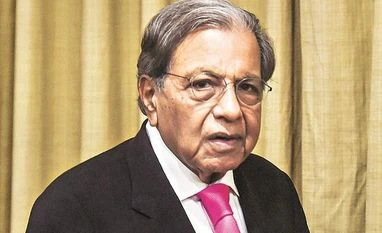
N K Singh
N K Singh, 15 Finance Commission Chairman
Geetika Srivastava New Delhi
2 min read Last Updated : Dec 28 2019 | 1:38 AM IST
N K Singh, chairman of the 15th Finance Commission, accused the World Bank as well as the International Monetary Fund (IMF) of “developing rigidities” while encountering new challenges, and assigning higher weighting to developed regions such as the Europe and US. He went on to say that the “rules of the game” were applied in a discriminatory manner between the rich and poor nations.

Singh questioned the way the IMF scrutinises macroeconomic policies of the developing world, which he claimed is done differently than for the richer nations. He stressed on the need for Asia to have a bigger say in decision-making. 

Addressing a gathering of The Indian Economic Association in Surat on Friday, he gave an example of Article IV of the IMF, where each member nation must subject themselves to a detailed scrutiny of their overall macroeconomic policies. 

This comes days after IMF Chief Economist Gita Gopinath cautioned the Fund may revise India’s growth forecast “significant downward”.

“How is it that the IMF failed to spot the global financial crisis of 2007-08 when there was such a dramatic meltdown of the US economy, which impaired the financial systems so severely? How did the Fund not spot a crisis of this scale much less prompt the US to take timely corrective action. How is it also that the rule of the game in terms of conditionalities of both for structural loans and for financial accommodation have more stringent conditions for developing world than other countries in Europe like Greece or Spain where these rules are more flexibly applied. Such discriminatory approach cannot inspire long-term confidence, both in terms of their technical competence or in terms of an impartial approach,” he said. 

“A disorderly international framework would not be in anyone’s interest," he said. “Over these decades both the World Bank and the IMF have developed many rigidities as they encounter new challenges. For one, in its decision-making process and quota rights, as they are called, notwithstanding recent changes they remain misaligned with the changing realities of the 21st Century.”

One subscription. Two world-class reads.

Already subscribed? Log in

Subscribe to read the full story →
*Subscribe to Business Standard digital and get complimentary access to The New York Times

Smart Quarterly

₹900

3 Months

₹300/Month

SAVE 25%

Smart Essential

₹2,700

1 Year

₹225/Month

SAVE 46%
*Complimentary New York Times access for the 2nd year will be given after 12 months

Super Saver

₹3,900

2 Years

₹162/Month

Subscribe

Renews automatically, cancel anytime

Here’s what’s included in our digital subscription plans

Exclusive premium stories online

  • Over 30 premium stories daily, handpicked by our editors

Complimentary Access to The New York Times

  • News, Games, Cooking, Audio, Wirecutter & The Athletic

Business Standard Epaper

  • Digital replica of our daily newspaper — with options to read, save, and share

Curated Newsletters

  • Insights on markets, finance, politics, tech, and more delivered to your inbox

Market Analysis & Investment Insights

  • In-depth market analysis & insights with access to The Smart Investor

Archives

  • Repository of articles and publications dating back to 1997

Ad-free Reading

  • Uninterrupted reading experience with no advertisements

Seamless Access Across All Devices

  • Access Business Standard across devices — mobile, tablet, or PC, via web or app

Topics :Fifteenth Finance CommissionN K SinghIMF

Next Story



