Indian railways stares at weak finances as staff, pension costs rise

Operating ratio has already crossed 100% in FY20, while share of internal resources in capex is down to 3.5%
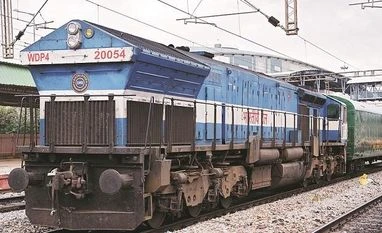
Indian railways, train
Shine Jacob New Delhi
4 min read Last Updated : Dec 30 2019 | 1:50 AM IST
The Indian Railways is increasingly depending on extra budgetary resources (EBR) for capital expenditure (capex) as the share of internal resources in capex shrinks, shows the national transporter’s annual plan, amid talks of restructuring of the Railway Board.

The operating ratio (ratio of operating expenses to operating revenue) of the railways has already crossed 100 per cent during the current financial year (2019-20, or FY20). This indicates that the Railways has spent more than what it earned so far. The operating ratio was at 97.3 per cent during 2018-19 compared to 98.4 per cent in 2017-18.

Based on the actuals of 2018-19, the share of internal resources in capex came down to 3.5 per cent, compared to 18 per cent in 2015-16. On the other hand, the dependency on EBR went up from 42 per cent to 57 per cent of the planned capex during the same period. 

It is expected to further increase in 2019-20. The major components of EBR include borrowings by the Indian Railway Finance Corporation (IRFC) and institutional finance through players like Life Insurance Corporation (LIC) of India.

“The share of internal generation was as high as 35-40 per cent in 2006-07. The fact that it has declined to 3.5 per cent is alarming. A major reason for this is the reluctance of successive governments not to go for a hike in passenger fares, starting from Mamata Banerjee’s time,” said R Sivadasan, former finance commissioner with the Railways.

He added that increased borrowing is a necessity under the current economic circumstances. This money could be a kind of stimulus, if the money is used in projects like Dedicated Freight Corridors (DFCs), where an assured return can be expected.

The trend of the declining share of internal resource generation in the annual plan is mainly because of static freight and passenger traffic and subsidising of passengers through freight. 

To tide over this, passenger fares are expected to increase by at least 40 paise per kilometre across all categories soon, said an official, though a railway spokesperson added rationalisation of tariff may not mean an increase in fares.

The total earnings from April 1 to December 10, 2019, saw a marginal 0.5 per cent drop to Rs 1.22 trillion compared to Rs 1.23 trillion during 2018-19. 

The earnings from its goods business dipped 2.94 per cent to Rs 79,297 crore during the period under review, compared to Rs 81,697 crore in 2018-19. 

“Operating ratio was affected by the Seventh Pay Commission on ordinary working expenses and pension expenditure and subdued growth in traffic earnings, too. The decline in freight revenue is also owing to an overall trend in the economy,” said an official.

The railways’ annual pension liability comes to around Rs 40,000 crore, while its staff costs is around Rs 79,000 crore. 

The Railway Board’s demand to the finance ministry to contribute towards pensions is seen as an effort to bring down the operating ratio to 70 per cent. 

In addition, the Board is also working on proposals to bring down the key performing indices to 90 per cent, which include steps such as improving operational efficiency and bringing down fuel cost.

Earnings from passenger traffic improved 4.21 per cent from Rs 35,250 crore in April 2018-December 2018 to Rs 36,732 crore in April 2019-December 2019. 

The freight traffic handled by the railways saw a marginal decline of 1.19 per cent to 872.37 million tonne. A major reason for the decline was the decline in coal traffic, which dropped 3.2 per cent to 420.2 mt, compared to 434.9 mt during the same time last year. 

Based on the Budget Estimates for 2019-20, of the Rs 1.6 trillion of capex, Rs 83,571 crore, or 52 per cent, is expected to come through EBR route.

One subscription. Two world-class reads.

Already subscribed? Log in

Subscribe to read the full story →
*Subscribe to Business Standard digital and get complimentary access to The New York Times

Smart Quarterly

₹900

3 Months

₹300/Month

SAVE 25%

Smart Essential

₹2,700

1 Year

₹225/Month

SAVE 46%
*Complimentary New York Times access for the 2nd year will be given after 12 months

Super Saver

₹3,900

2 Years

₹162/Month

Subscribe

Renews automatically, cancel anytime

Here’s what’s included in our digital subscription plans

Exclusive premium stories online

  • Over 30 premium stories daily, handpicked by our editors

Complimentary Access to The New York Times

  • News, Games, Cooking, Audio, Wirecutter & The Athletic

Business Standard Epaper

  • Digital replica of our daily newspaper — with options to read, save, and share

Curated Newsletters

  • Insights on markets, finance, politics, tech, and more delivered to your inbox

Market Analysis & Investment Insights

  • In-depth market analysis & insights with access to The Smart Investor

Archives

  • Repository of articles and publications dating back to 1997

Ad-free Reading

  • Uninterrupted reading experience with no advertisements

Seamless Access Across All Devices

  • Access Business Standard across devices — mobile, tablet, or PC, via web or app

Topics :Budget 2020Indian Railways

Next Story



