Financial aid to pregnant women may cost govt Rs 16,000 cr a year

Amount will be a one-time grant for women bearing their child, could be limited to two pregnancies
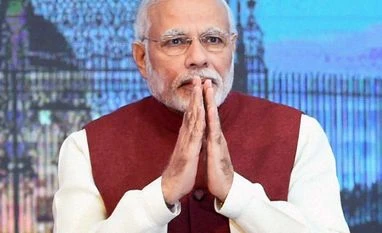
Narendra Modi, Modi, Narendra
Photo: Shutterstock
Sanjeeb MukherjeeVeena Mani New Delhi
Last Updated : Jan 24 2017 | 8:27 AM IST
The central government’s plan — announced by Prime Minister Narendra Modi on December 31 — to provide Rs 6,000 to each identified pregnant woman and lactating mother in the country is expected to cost the exchequer around Rs 16,000 crore a year.

Considering that there are around 26 million pregnancies in India annually, the amount will be a one-time grant for women bearing their child and could be limited to two pregnancies.
 
The scheme, according to some officials, could integrate into itself the Janani Suraksha Yojana of the ministry of health and family welfare. The finance ministry will take a decision on this soon. A senior health ministry official told Business Standard: “The competent authorities are working on the scheme.” 

The Janani Suraksha Yojana was launched in 2005. Under it, a grant of Rs 1,400 is given to each pregnant woman in states whose performance in maternal mortality is below par. It is Rs 700 in states that have done well in this regard.

Under the National Food Security Act, all identified pregnant women and lactating mothers are entitled to receive a maternity benefit of not less than Rs 6,000.

So far, the Centre had been conducting pilots in some districts and now plans to cover all the 640 districts in the country under this.

The NITI Aayog is looking at details as to whether the grant will be valid only for the women who give birth to children at institutions and those who receive the mandatory vaccination. 

Fifty-three districts were getting an assistance of Rs 6,000 per pregnant woman under the pilot project, the Prime Minister had recently said. 

It is a centrally sponsored scheme and the cost sharing between the Centre and States could be in the ratio of 60:40 for all states and Union territories (with legislature) and 90:10 for the North-East and Himalayan states. 

For the Union territories without a legislature, the scheme could be funded by the Centre alone. 


One subscription. Two world-class reads.

Already subscribed? Log in

Subscribe to read the full story →
*Subscribe to Business Standard digital and get complimentary access to The New York Times

Smart Quarterly

₹900

3 Months

₹300/Month

SAVE 25%

Smart Essential

₹2,700

1 Year

₹225/Month

SAVE 46%
*Complimentary New York Times access for the 2nd year will be given after 12 months

Super Saver

₹3,900

2 Years

₹162/Month

Subscribe

Renews automatically, cancel anytime

Here’s what’s included in our digital subscription plans

Exclusive premium stories online

  • Over 30 premium stories daily, handpicked by our editors

Complimentary Access to The New York Times

  • News, Games, Cooking, Audio, Wirecutter & The Athletic

Business Standard Epaper

  • Digital replica of our daily newspaper — with options to read, save, and share

Curated Newsletters

  • Insights on markets, finance, politics, tech, and more delivered to your inbox

Market Analysis & Investment Insights

  • In-depth market analysis & insights with access to The Smart Investor

Archives

  • Repository of articles and publications dating back to 1997

Ad-free Reading

  • Uninterrupted reading experience with no advertisements

Seamless Access Across All Devices

  • Access Business Standard across devices — mobile, tablet, or PC, via web or app

Next Story


