The central government has decided to widen the acceptability of its biggest social security initiative, the National Food Security Act, by agreeing to equally share the financial burden of transportation of grain and commission for ration-shop owners with state governments.
Officials said the food ministry planned to move a note on the issue, for early discussion at the Cabinet.
Now, state governments bear the expenses of transportation of foodgrain from Food Corporation of India’s godowns to ration shops and also pay commission to the shop owners. The rates vary. For example, common rice to Above Poverty Line families is sold by the Centre at Rs 7.95 a kg, while it costs Rs 10 a kg in Assam and Rs 11.50 in Chhattisgarh, after adding the transportation cost and commission.
Sharing of expenses was one of the main demands of some state governments, mainly the non-Congress ones, many of which have yet not started the process of implementing the law. “The total burden of transportation expenses and commission for ration-shop owners will be around Rs 7,500 crore a year, of which Rs 3,750 crore will be borne by the central government,” an official said.
This will further inflate the Centre’s subsidy calculation on account of the new law, once it is implemented.
The government is to provide provide cheap foodgrain to about 800 million Indians under the Act. Items such as edible oils and pulses will be added once leakages in the Public Distribution System (PDS) are checked.
“By the end of February, almost 40 per cent of the states will get ready to implement the Food Act. Recently, Punjab has informed us that it will implement the programme from December, while Kerala will start from February and Karnataka by the end of this month,” Food Minister K V Thomas told Business Standard.
Officials said a basic problem in smooth operation of the NFSA was PDS leakage. Once the Centre starts sharing the burden with states, they will be encouraged to increase the incentive given to ration shop owners to sell PDS foodgrain, stopping them from diverting it to the open market, is the hope.

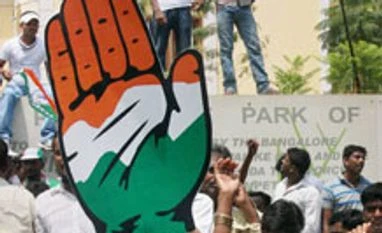 "Food security law: Centre to share more costs with states")


 Connect with us on WhatsApp