
GDP growth to drop to 5.5% in FY17: govt sources
Govt to soon advise banks to allow deferred payment of farm debt, review decision to allow note exchange in cooperative banks
 "GDP growth to drop to 5.5% in FY17: govt sources")
Explore Business Standard
Govt to soon advise banks to allow deferred payment of farm debt, review decision to allow note exchange in cooperative banks
However, the minders of Modi government's economic policy are confident of the economy reaping the rewards of demonetization in seven to eight quarters, or around late-2018. The Lok Sabha elections are due by mid-2019.
According to Finance Ministry sources, the government anticipates several long term gains from its decision to demonetise 1,000- and 500-rupee currency notes. These are: a shrinking of the informal economy as more transactions are done through formal banking channels, a wider tax base, more public spending and radical interest rates that will in turn spur private investments.
While the government has an eye on the long term benefits, sources assured that immediate needs, particularly of rural areas, were also being addressed. Chief of these is to ensure money supply in rural areas. For this, the government and nationalized banks will launch a focused drive for the next 10 days, including deploying mobile automated teller machines, or ATMs, in these areas.
Today, Bharatiya Janata Party (BJP) President Amit Shah and Power Minister Piyush Goyal held over half an hour long meeting in Finance Minister Arun Jaitley's chambers in Parliament House. Sources said the meeting was to discuss current political scenario. It is learnt that the forthcoming assembly elections to five states, including in the key state of Uttar Pradesh, were discussed.
The BJP has conveyed to the government its assessment of the problems that farmers have faced after demonetization. Apart from other measures, the government is likely to ask banks to defer the loan repayment schedule of farm debts until after the harvesting of the rabi crop. On Monday, the Reserve Bank of India announced that farmers can buy seeds using old Rs 500 currency notes.
Several political parties have also urged the government to provide relief to cooperative banks. Government estimates are that deposits in cooperative banks after demonetization are much higher than those in other banks. However, government also suspects that most cooperative banks are controlled by one or the other political party and deal in unaccounted fund of these parties.
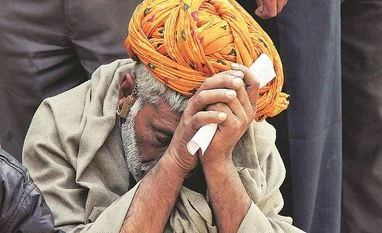
But after representation from political leaders - including from Nationalist Congress Party's Sharad Pawar, the Left parties in Kerala and even BJP leaders - the government could suggest the Reserve Bank to lift its ban on allowing cooperative banks to exchange notes. There have been farmer protests, including in Surat, demanding that cooperative banks start exchanging notes. Most farmers have bank accounts in cooperative banks.
First Published: Nov 22 2016 | 9:30 AM IST

