Indian Space Research Organisation (Isro) is now trying to handhold industry to make launch vehicles and satellites, utilising more of its own resources for larger missions and technology research. K SIVAN, chairman of Isro and secretary, department of science, in the Union government, to T E Narasimhan on this and allied measures. Edited excerpts:
You have been emphasising on spreading awareness about Isro's activities to the public.
We have started with expanding the activities at headquarters, to handle the multiple activities we are doing now. This includes the outreach programme and capacity building with a wider vision. The headquarters is the nodal agency interacting with stakeholders on the one side and developers and suppliers on the other.
How is industry going to help you meet the tight launch schedule?
Even now, it is industry that is making the launch vehicle and satellites. Nearly 85 per cent of the cost of our rocket is supplied by industry. They supplying as vendors; integration and quality assessment is by Isro. We now want to give more responsibility to them, in which they can create a consortium and carry out integration, while we do the quality tests. We are targeting to hand over the responsibility of integrated supplies to industry within a year. Industry has the manufacturing capability; if they want space for integration, we can offer Isro's facility on lease. By pushing PSLV (Polar Satellite Launch Vehicle) production to industry, the extra personnel thus available will be utilised to do projects such as the human space mission.
We are looking for third-generation remote sensing ones, in terms of cartography and other types of remote sensing. Adding sub-metre accuracy, we are expecting more accuracy in data. Oceansat and Resourcesat will also see such developments, for the third generation.
Regarding communication satellites, we are going towards the next level of high throughput satellites for increasing the data download rate. This data rate of 100 Gbps will enhance high bandwidth connectivity to rural parta of the country. In navigation satellites, we presently depend on atomic clocks procured from abroad. In the next version, we want an indigenous atomic clock.
Beyond that, we are going to have a science programme, for which we are using the Aditya-L1 and Chandraayan-2. And, we are thinking about a mission to Venus or a Mars Orbiter Mission-2. It is a long-term programme. Aditya-L1's launch is planned for next year or at the beginning of the year after. For Mars Orbiter Mission-2, we are only talking about the science part at present. Once that is defined very clearly, we will get into the actual works. The first mission is still active.

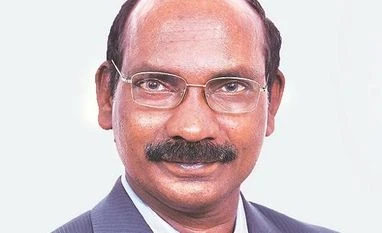 "85% material cost for our rockets comes from industry: Isro Chairman")











