Glasgow COP26: Govts working to make agriculture less polluting

In the COP26, India has committed to reduce overall carbon emission by 1 billion tonnes by 2030
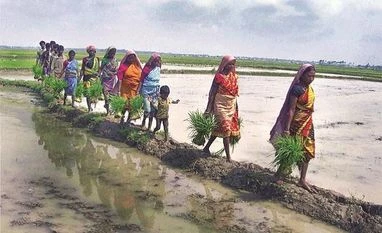
Glasgow COP26: Govts working to make agriculture less polluting
Sanjeeb Mukherjee New Delhi
4 min read Last Updated : Nov 08 2021 | 11:27 PM IST
As India has become one of the 27 countries to sign the action agenda on sustainable agriculture at the conclusion of the first week of COP26 on Saturday, officials said the Centre and states were working on multiple options to fulfil the country’s commitment on making farming in the country more sustainable and less polluting.

Farming contributes around 14 per cent of annual greenhouse gas emissions (GHG) in the country. In that, almost 55 per cent comes from the livestock sector.

In 2019, studies show carbon dioxide emission in India was 2,597.4 million tonnes. Over the past 50 years, emission rose substantially from 232.8 million tonnes to 2,597.4 million tonnes with an annual increase rate that reached a maximum of 11.65 per cent in 2009 but decreased to 1.6 per cent in 2019.

In the COP26, India has committed to reduce overall carbon emission by 1 billion tonnes by 2030. Agriculture has to be part of this because it is among the top five emitters in the country.

“Work is being done in multiple formats and manners to reduce GHG emission in agriculture. That includes extensive research and on-field trials on climate-resistant seeds and varieties, climate-resistant farming practices, managing soil, diversifying from crops such as paddy to less water-intensive ones, widely propagating direct-seeded rice techniques that require less water, reduction in residue burning, etc,” a senior scientist at the Indian Council of Agriculture Research (ICAR) told Business Standard.


When it comes to livestock, the government is working on improving cattle shelter management so that animal waste is treated properly, and on a more balanced diet for cattle so that methane emission comes down, he said. On Saturday, the “Sustainable Agriculture Policy Action Agenda for the Transition to Sustainable Agriculture and Global Action Agenda for Innovation in Agriculture” was among the highlight action pledges clinched by the participating countries at COP26.

The countries laid out new commitments to change their agricultural policies to become more sustainable and less polluting, and to invest in the science needed for sustainable agriculture and for protecting food supplies against climate change.

Apart from India, the countries that have signed the pledge include Australia, New Zealand, Uganda, Madagascar, Tanzania, Nigeria, Lesotho, Guinea, Ghana, Sierra Leone, Morocco, Ethiopia, Vietnam, Laos, Indonesia, the Philippines, the Netherlands, Spain, Switzerland, the UK, Germany, Colombia, Costa Rica, and the UAE.

The commitments include Brazil’s plan to scale down its ABC+ low carbon farming programme to 72 million hectares, saving 1 billion tonnes of emission by 2030, Germany’s plans to lower emissions from land use by 25 million tonnes by 2030 and the UK’s aim to engage 75 per cent of farmers in low-carbon practices by 2030, a statement said.

However, as regards India, officials said it was not clear yet whether any firm commitment or target had been given to reduce the extent of GHG emission in agriculture within a specific timeframe.

“I’m not aware whether any specific commitment has been made on sustainable agriculture because our stand has always been that Indian agriculture is primarily done by small farmers and we have to keep their welfare in mind,” another official said.

The Ministry of Agriculture is responsible for running missions and sub-missions on sustainable agriculture under the National Action Plan on Climate Change. 

The progress made in those that are quantifiable, monitorable, and deliverable is shared with the Ministry of Environment and Forests from time to time.

In recent years, initiatives such as conservation farming and zero-budget agriculture have been promoted to meet climate change challenges.

The Economic Survey 2018 carried out a detailed analysis of the impact of climate change on Indian agriculture.

In non-irrigated areas of the country, it said, a one degree Centigrade rise in temperature would reduce agriculture income by 6.2 per cent during the kharif season and 6 per cent in the rabi season.

One subscription. Two world-class reads.

Already subscribed? Log in

Subscribe to read the full story →
*Subscribe to Business Standard digital and get complimentary access to The New York Times

Smart Quarterly

₹900

3 Months

₹300/Month

SAVE 25%

Smart Essential

₹2,700

1 Year

₹225/Month

SAVE 46%
*Complimentary New York Times access for the 2nd year will be given after 12 months

Super Saver

₹3,900

2 Years

₹162/Month

Subscribe

Renews automatically, cancel anytime

Here’s what’s included in our digital subscription plans

Exclusive premium stories online

  • Over 30 premium stories daily, handpicked by our editors

Complimentary Access to The New York Times

  • News, Games, Cooking, Audio, Wirecutter & The Athletic

Business Standard Epaper

  • Digital replica of our daily newspaper — with options to read, save, and share

Curated Newsletters

  • Insights on markets, finance, politics, tech, and more delivered to your inbox

Market Analysis & Investment Insights

  • In-depth market analysis & insights with access to The Smart Investor

Archives

  • Repository of articles and publications dating back to 1997

Ad-free Reading

  • Uninterrupted reading experience with no advertisements

Seamless Access Across All Devices

  • Access Business Standard across devices — mobile, tablet, or PC, via web or app

Topics :Climate ChangeCOPagriculture economyEnvironment pollution

Next Story



