Govt commissions studies on greenhouse gas emissions
Three studies are meant to help India decide its stance at global climate negotiations
Nitin Sethi New Delhi In the run-up to the global climate agreement, the government has commissioned studies to project the future greenhouse gas emissions of the country and the legal architecture of the global agreement that India should advocate at the UN climate negotiations.
These two are to be followed up with a third, which would look at the manner in which the principle of equity can be operationalised in the new global agreement.
A new global pact for reducing emissions is to be signed between more than 190 countries under the existing UN climate change convention by 2015. Negotiations on a draft text for it are to begin at the end of this year though hectic initial parleys under the UN and other forums have been taking place through the year. The three studies are meant to help India decide its negotiating stance for these negotiations. India is required to also commit to an emission reduction target. It so far has committed to deliver a 20-25 per cent reduction in the emission intensity of the economy by 2020 compared to 2005 levels.
The study on greenhouse gas emissions trajectory, which is closely linked to the state of economy and energy matrix, has been commissioned to a group of three institutes - The Energy Research Institute, Integrated Research and Action for Development and Institute of Economic Growth. This is supposed to yield three packets of results for the government from each of the think tanks based on their different projection models.
The study on the legal form of the 2015 agreement has been commissioned to the National Law School, Bangalore. "Results of both these studies are expected by the end of the year," a senior official in the government told Business Standard. "We shall use these as a base for our decisions and submission of our nationally determined target in March 2015," he added.
Besides these, the long-pending Low Carbon Growth study headed by Kirit Parikh and commissioned by the Planning Commission has submitted the final to the Planning Commission and is expected to be put in public domain after the last day of voting for Parliament. The report was expected to provide detailed costing for any emission reduction actions.
The environment minister in the new government is likely to see heavy workload on the climate front with formal UN negotiations for the new agreement slated in June and a series of bilateral and plurilateral meetings also on the slate.
A meeting hosted by the US, called the Major Economies Forum, is to be held in May. The US has been pushing for its initiative for all the big economies to take a 30 per cent cut in emissions by 2030 from the building sector, which India and other large developing economies have so far opposed, concerned that it breaches the firewall between developing and developed countries and takes the onus away from the rule-based formal UN negotiations.
The United Nations secretary general has also called for a meeting of the heads of states in September in the hope of securing pledges for emission reduction and finance at the summit rather than awaiting the process at the formal UN talks. This has not gone down well with countries such as Brazil, China and India and other large developing economies, again for delinking the relation between support and finance from developed countries for the climate controlling actions that developing countries take.
A third round of formal UN talks before the first draft text of the new agreement is put together is also expected in September. Besides this, the environment minister would be expected to participate in quarterly meetings of the two key blocs of countries India is a member of, the BASIC which also includes China, Brazil and South Africa and the like-minded developing countries, that includes China, Indonesia, Malaysia and other large economies coupled with countries such as Philippines, Sudan and others.
ENVIORNMENTAL CONCERN * A new global pact for reducing emissions is to be signed between more than 190 countries under the existing UN climate change convention by 2015
* India is required to commit to an emission reduction target. It so far has committed to deliver a 20-25 per cent reduction in the emission intensity of the economy by 2020 compared to 2005 levels.
* The study on greenhouse gas emissions trajectory, which is closely linked to the state of economy and energy matrix, has been commissioned to a group of three institutes - The Energy Research Institute, Integrated Research and Action for Development and Institute of Economic Growth
* The study on the legal form of the 2015 agreement has been commissioned to the National Law School, Bangalore
* The Low Carbon Growth study headed by Kirit Parikh and commissioned by the Planning Commission has submitted the final report and is expected to be put in public domain after the last day of voting

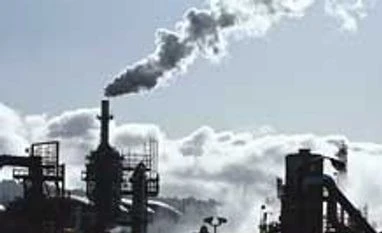 "Govt commissions studies on greenhouse gas emissions")


 Connect with us on WhatsApp