
Govt counters UN report on fall in FDI, claims it rose to $61.96 bn in FY18
Suresh Prabhu says his US visit next week will focus on issues from trade to immigration
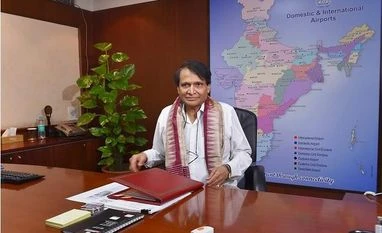 "Govt counters UN report on fall in FDI, claims it rose to $61.96 bn in FY18")
premium
Explore Business Standard

Associate Sponsors
Co-sponsor
Suresh Prabhu says his US visit next week will focus on issues from trade to immigration
Addressing the media on four years of the Modi government, Ramesh Abhishek, Secretary at the Department of Industrial Policy and Promotion (DIPP) pointed out that FDI rose to $61.96 billion in 2017-18 from $60.08 billion the year before. FDI in the first four years of the Narendra Modi government rose to $222.75 billion from $152 billion in the previous four years, Abhishek added.
While the government compiles FDI statistics over the financial year period, the UNCTAD report calculated the inflows on a calendar year basis to show that inbound equity investments fell from $44.48 billion to $39.91 billion in 2017.
All investments welcome but Apple hasn't called so far
Commerce and industry minister Suresh Prabhu also reiterated that the government was focused on harnessing global FDI flows by making India a better place to do business in. Responding to questions over why investment plans of US majors such as Tesla or Apple never materialised despite initial interest from the companies, Prabhu said that the government welcomes any proposal from FDI but these companies were yet to call again.
In this regard, the upcoming industrial policy will ease processes and make Indian firms more competitive while aiming to grow the size of the economy to $5 trillion within the next 7-8 years, Prabhu said. Of this, $3 trillion is expected to be from the services sector while one trillion each would be provided by the industrial, and agricultural and allied activities sectors.
India's GDP, currently pegged at more than $2.8 trillion by the International Monetary Fund, grew at the fastest pace in seven quarters at 7.7 per cent during January-March 2018. This put India firmly in line to overtake the United Kingdom as the fifth- largest economy in 2018, according to international policy experts.
Merchandise exports still lagging
On the other hand, Prabhu also announced that exports, including both services and merchandise, would also touch $1 trillion within the next 7-8 years. However, the current Foreign Trade Policy (2015-2020) had earlier pegged for $900 billion worth of total exports by 2020. The $1 trillion target shows the government has finally reassessed India's growth potential in trade and its real position in the global trading ecosystem, a Delhi-based trade expert said.
Latest ministry data showed that while total exports stood at $580.6 billion in 2017-18, up 9.62 per cent from 2014-15, merchandise exports fell from $310.3 billion to $303.3 billion, registering a fall of 2.25 per cent.
"We have to take into account the growing dominance of services exports, something that India is competitive in. India can expand its services trade by a large margin and that's why we have identified 12 champion services sectors and earmarked Rs 5,000 crore (Rs 50 billion) for their development," Prabhu said.
Focus on trade relations to remain in last year of Govt
On trade relations, Prabhu noted that while progress on major trade pacts such as the Regional Comprehensive Economic Partnership (RCEP) has been made, India is actively holding bilateral talks with member countries, such as China, Australia and New Zealand, with which it doesn't have a free trade pact. Demands for tariff reduction from these developed economies and India's tough position on market access for services exports have slowed negotiations that were set to end last year.
"There will be a meeting in Tokyo on July 1 and the Prime Minister will attend the RCEP summit in November. We are committed to it," Prabhu said.
On the bilateral front, Prabhu said India was actively dealing with the United States on issues across the board, including immigration, trade and investments. "I will visit the US next week and talk about our concerns, and hopefully talks will go forward," he said, adding that the US government's demand for slashing of tariffs for US exports, such as Harley Davidson motorcycles, is part of usual trade demands by countries.
Already subscribed? Log in
Subscribe to read the full story →

3 Months
₹300/Month
1 Year
₹225/Month
2 Years
₹162/Month
Renews automatically, cancel anytime

Over 30 premium stories daily, handpicked by our editors


News, Games, Cooking, Audio, Wirecutter & The Athletic
Digital replica of our daily newspaper — with options to read, save, and share


Insights on markets, finance, politics, tech, and more delivered to your inbox
In-depth market analysis & insights with access to The Smart Investor


Repository of articles and publications dating back to 1997
Uninterrupted reading experience with no advertisements


Access Business Standard across devices — mobile, tablet, or PC, via web or app
First Published: Jun 09 2018 | 12:47 AM IST

