Home / Economy / News / Govt may look at second stimulus once Covid-19 cases ebb: Expenditure Secy
Govt may look at second stimulus once Covid-19 cases ebb: Expenditure Secy
The government may look at introducing a second set of fiscal stimulus measures once the Covid infections abate and the psychological fears in people's minds ebb, a top Finance Ministry official said
The government may look at introducing a second set of fiscal stimulus measures once the COVID-19 infections abate and the psychological fears in people's minds ebb, a top Finance Ministry official said on Tuesday.
The government has also observed that 40 per cent of the cash transfers directly into the beneficiaries' accounts recently have been saved and not spent, leading to a feeling that there are limitations of the stimuli measures and hence, making timing the most important factor, Union Expenditure Secretary T V Somanathan said.
It can be noted that the government's first round of fiscal stimulus was announced in late March, and included measures like extra spend of nearly 2 percentage points of GDP. The RBI delivered two deep rate cuts before surprising all with a pause this month, leading some analysts to opine that the government will have to do the heavy lifting now.
Speaking at an event hosted by Dun and Bradstreet India, Somanathan said normal economic activity is in "abeyance" right now and it has nothing to do with what the government has done or not done, but attributed the same to fears among the people.
"Right now, the evidence is that the problem is not susceptible of stimulation by fiscal or government measures. It's not as if people are waiting for something to be done by the government and then they are ready to go out and resume normal economic activity," he noted.
Somanathan also said the health situation remains "very vulnerable" in many parts of the country and all the personal services activity beyond finance and insurance, like cinema halls, malls and restaurants have been severely impacted.
"These are things that I don't think a fiscal stimulus or a diktat from the government can make people re-enter these spheres of activity. The revival will really come when the psychology of the pandemic begins to ebb," he said, hoping that it will be a reality sooner.
As and when fears on the health front subside in the minds of people, the government can help the economy "a little bit with a few measures here and there", he said.
(Only the headline and picture of this report may have been reworked by the Business Standard staff; the rest of the content is auto-generated from a syndicated feed.)

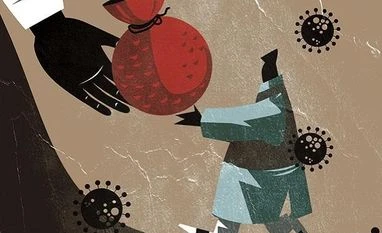 "Govt may look at second stimulus once Covid-19 cases ebb: Expenditure Secy")


 Connect with us on WhatsApp