Govt panel suggests cash fertiliser subsidy of Rs 5,000 per year per farmer

If the government accepts this recommendation, the ongoing practice of transferring subsidy to fertiliser-producing companies will be discontinued
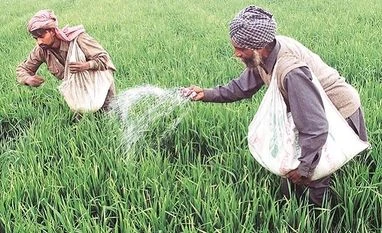
Fertiliser movement through coastal shipping now eligible for subsidy
Abhishek Waghmare New Delhi
2 min read Last Updated : Sep 23 2020 | 11:15 PM IST
Close on the heels of the Centre passing three ordinances to regulate out-of-ma­ndi transactions, provide a framework for contract farming and amend the Essential Commodities Act, the Comm­ission for Agricultural Costs and Prices (CACP) has recommended a fertiliser cash subsidy of Rs 5,000 per year to farmers. 

The government’s main rate setting panel suggested that this be done in two tranches of Rs 2,500 each in the kharif and rabi seasons.

CACP’s non-price recommendations are largely advisory in nature and the Centre is under no compulsion to impl­ement them. However, if the government accepts this, it can alter the ongoing practice of transferring subsidy to fertiliser producing companies. Sources said the calculation by CACP involves two parameters: Total cumulative annual subsidy per hectare and average farm size (of 1.08 hectares).

“We have arrived at the figure by dividing the total cumulative annual subsidy on fertiliser by the average farm size, which comes to around Rs 5,000 per annum. It does not consider average usage by farmers,” a senior official said.


Currently, almost 70 per cent of the purchase price of urea is subsided by the central government. In case of non-urea fertiliser, though the prices are market linked, there is an element of subsidy in them as well. In the 2020-21 Union Budget, the central government allocated Rs 71,309 crore towards fertiliser subsidy of which around Rs 48,000 crore (67.3 per cent) was towards urea and the remaining non-urea fertilisers. In case of fertilisers, the subsidy is routed through companies that provide farmers items at cheap rates. The bills of these companies are then cleared by the government. A few years back, the government improved the method of subsidy payment to fertiliser companies by changing the point of the subsidy.

The firms get the subsidy once fertilisers are sold to farmers through point of sale (PoS) machines with biometric authentication. Earlier, they used to get the subsidy at the district level based on the receipt of fertilisers.

“There is a need to shift to DBT (direct benefit transfer) of fertiliser subsidy so that far­mers can make choices about use of different nutrients based on soil nutrient status,” the CACP said in its rabi price policy report for marketing year 2021-22.

One subscription. Two world-class reads.

Already subscribed? Log in

Subscribe to read the full story →
*Subscribe to Business Standard digital and get complimentary access to The New York Times

Smart Quarterly

₹900

3 Months

₹300/Month

SAVE 25%

Smart Essential

₹2,700

1 Year

₹225/Month

SAVE 46%
*Complimentary New York Times access for the 2nd year will be given after 12 months

Super Saver

₹3,900

2 Years

₹162/Month

Subscribe

Renews automatically, cancel anytime

Here’s what’s included in our digital subscription plans

Exclusive premium stories online

  • Over 30 premium stories daily, handpicked by our editors

Complimentary Access to The New York Times

  • News, Games, Cooking, Audio, Wirecutter & The Athletic

Business Standard Epaper

  • Digital replica of our daily newspaper — with options to read, save, and share

Curated Newsletters

  • Insights on markets, finance, politics, tech, and more delivered to your inbox

Market Analysis & Investment Insights

  • In-depth market analysis & insights with access to The Smart Investor

Archives

  • Repository of articles and publications dating back to 1997

Ad-free Reading

  • Uninterrupted reading experience with no advertisements

Seamless Access Across All Devices

  • Access Business Standard across devices — mobile, tablet, or PC, via web or app

Topics :fertiliser subsidyfertilisersIndian Farmerssubsidy

Next Story


