'Govt plan may bring non-essential drugs under price control'
DoP should instead address issue of delay in fixing the prices of 'new drugs' by the National Pharmaceutical Pricing Authority
Press Trust of India New Delhi The government's push for a change in the method of price calculation methodology for new drugs can lead to non-essential drugs coming under price control, a senior pharma industry body executive said.
Chemicals and Fertilisers ministry in a statement issued last week had said that the Department of Pharmaceuticals (DoP) is considering a change in the method of approving prices of new drugs.
"This proposal relates to doing away with retail price by ceiling price for 'new drugs'. It has potential to bring non- essential drugs under price control, reduce competition and compromise growth," Indian Pharmaceutical Alliance (IPA) Secretary General D G Shah told PTI.
The DoP should instead address the issue of delay in fixing the prices of 'new drugs' by the National Pharmaceutical Pricing Authority (NPPA), he added.
Earlier, the government had confirmed that for new drugs it is considering a change in the method of approving their prices.
"The government is in consultation with the industry to explore doing away with the present practice of deciding a new price for each applicant of new drug, which is causing considerable time delay in launch of the new drugs in the market by the manufacturers," the government release had said.
As per the Drugs (Prices Control) Order, 2013, a new drug is described as a formulation launched by an existing manufacturer of a drug of specified dosages and strengths as listed in the National List of Essential Medicines (NLEM) by combining the drug with another drug.
It also applies to a formulation launched by changing the strength or dosages or both of the same drug of specified dosages and strengths as listed in the NLEM.
Under the DPCO 2013, NPPA fixes ceiling price of essential medicines of Schedule I based on simple average of all medicines in a particular therapeutic segment with sales of more than 1 per cent of the category.
In respect of medicines not under price control, manufacturers are allowed to increase the maximum retail price by 10 per cent annually.
(Only the headline and picture of this report may have been reworked by the Business Standard staff; the rest of the content is auto-generated from a syndicated feed.)

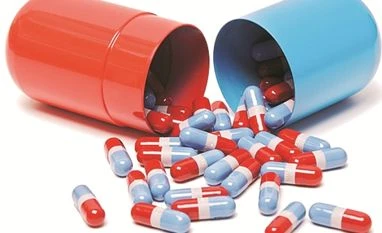 "'Govt plan may bring non-essential drugs under price control'")


 Connect with us on WhatsApp