Give data access to consumers, not companies, says Nandan Nilekani

Competitiveness to improve by moving control over data away from entities
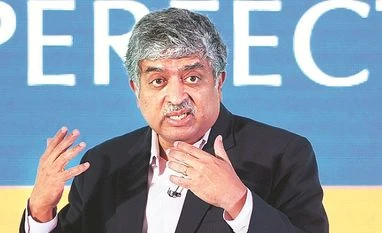
Nandan Nilekani
Infosys co-founder Nandan Nilekani
Alnoor Peermohamed Bengaluru
Last Updated : Aug 17 2017 | 2:01 AM IST
The government should create a policy that gives consumers access to the data they create while using digital services, rather than allowing entities build data silos for their own benefit, says Nandan Nilekani.

The former chairman of the Unique Identification Authority of India said India would be able to ensure privacy, keep data colonisation at bay and boost competitiveness by inverting the control of data away from entities to the individuals producing these.

“Every second, three more Indians are experiencing internet for the first time (and) is getting headlocked into a digital era at a pace never seen before... But how do you convert this data in such a way that it benefits everybody? That’s a strategic question,” said Nilekani, at an event in Bengaluru on Wednesday.

Taking a view that India was starkly different from the West when it comes to digitisation, Nilekani said India should not merely follow what the western world is doing in terms of framing policies. People were already richer in the West when smartphones began making inroads a decade ago. “The West was economically rich before it was data rich. If you say the data-rich era began 15 years back and accelerated 10 years back with the smartphone, you already had a society with a per capita income of $40,000,” he said.

Moreover, consumers will have the freedom to take their data to the service that offers them the greatest benefit, be it for financial services such as loans or something as simple as their social chat on networks such as Facebook, LinkedIn, Google+, etc.

India has an ad spend of just $10 billion for more than a billion people. Businesses and services built on an advertising model will limit the reach to no more than 50 million people. The advertising model works best in countries where people are already rich, he said.

“If people are data rich before they are economically rich, can we flip the argument and say, since the person has so much data about himself, can he use that data to empower himself and improve his life? So, fundamentally, we need to rethink the model of how data should be used in the Indian context,” added Nilekani.

One subscription. Two world-class reads.

Already subscribed? Log in

Subscribe to read the full story →
*Subscribe to Business Standard digital and get complimentary access to The New York Times

Smart Quarterly

₹900

3 Months

₹300/Month

SAVE 25%

Smart Essential

₹2,700

1 Year

₹225/Month

SAVE 46%
*Complimentary New York Times access for the 2nd year will be given after 12 months

Super Saver

₹3,900

2 Years

₹162/Month

Subscribe

Renews automatically, cancel anytime

Here’s what’s included in our digital subscription plans

Exclusive premium stories online

  • Over 30 premium stories daily, handpicked by our editors

Complimentary Access to The New York Times

  • News, Games, Cooking, Audio, Wirecutter & The Athletic

Business Standard Epaper

  • Digital replica of our daily newspaper — with options to read, save, and share

Curated Newsletters

  • Insights on markets, finance, politics, tech, and more delivered to your inbox

Market Analysis & Investment Insights

  • In-depth market analysis & insights with access to The Smart Investor

Archives

  • Repository of articles and publications dating back to 1997

Ad-free Reading

  • Uninterrupted reading experience with no advertisements

Seamless Access Across All Devices

  • Access Business Standard across devices — mobile, tablet, or PC, via web or app

Next Story



