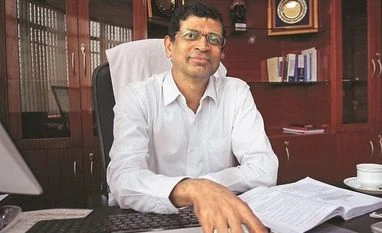
The ground seems to be ready to experiment new options for resolution of stress and the market is anticipating a hybrid framework between a court-supervised insolvency framework and an out-of-court restructuring schemes, IBBI Chairperson M S Sahoo has said.
In place for more than four years, the Insolvency and Bankruptcy Code (IBC) is helping in resolution of stressed assets in a market-linked and time-bound manner, and the proposal for "pre-pack" framework is also in the works.
"Since some tasks of an insolvency proceeding are completed before the formal process begins, and some elements of formal process are avoided, pre-pack saves both on costs and time," Sahoo told PTI.
The Insolvency and Bankruptcy Board of India (IBBI), a key institution in implementing the IBC, has also taken various steps to address difficulties of stakeholders concerned.
According to him, insolvency regimes in most jurisdictions are not designed to address delinquencies arising from the COVID-19-like crisis when several viable businesses simultaneously fail to stand on their feet for force majeure conditions. Also, the availability of resolution applicants to rescue them remains a concern.
"This has highlighted the need for pre-pack which is considered fast, cost efficient and effective in resolution of stress, with the least business disruptions.
In an e-mail interview, Sahoo also pointed out that with considerable learning and maturity of the ecosystem, and a reasonably fair debtor-creditor relationship in place, the ground seems ready to experiment new options for resolution of stress.
"The market has been advocating and anticipating a resolution framework which is a hybrid between the court-supervised insolvency framework and out-of-court restructuring schemes that incorporates the virtues of both the worlds sans their demerits. The most popular form of such dispensation is pre-pack," he noted.
Generally, under a pre-pack (pre-packaged) process, main stakeholders like creditors, shareholders and the existing management/ promoter can come together to identify a prospective buyer. Then, they can negotiate a resolution plan before submitting the same to the National Company Law Tribunal (NCLT) for formal approval.
From December 1, 2016 till the end of September last year, total 4,008 CIRPs (Corporate Insolvency Resolution Processes) have commenced under the IBC.
Out of the total, 473 CIRPs have been closed on appeal or review or settled, 291 have been withdrawn, 1,025 have ended in orders for liquidation and 277 have ended in approval of resolution plans, as per data compiled by the IBBI.
The provisions relating to CIRP came into effect from December 1, 2016.
In the wake of the COVID-19 pandemic, the government has suspended fresh proceedings under the IBC since March 25 last year. Last month, the suspension period was extended till March, which means that fresh cases cannot be filed under the IBC for almost the whole of the current fiscal -- April 2020 to March 2021 period.
On whether there is a possibility of a flurry of insolvency cases coming up once the suspension is done away with, Sahoo said the number of applications for initiating insolvency is likely to increase but the increase may not be significant.
He noted that stakeholders are continuing to resolve stress through various modes such as scheme of compromise or arrangement under the Companies Act, 2013, and the RBI's prudential framework. Entities are also going for corporate insolvency resolution process in respect of stress other than related to COVID-19.
According to him, stakeholders are exploring innovative options for resolution of stress while taking several cost cutting measures to avoid stress.
Also, Sahoo said viable companies would have normal business operations after the pandemic subsides, higher threshold of default for initiation insolvency proceedings keeps most MSMEs out of insolvency proceedings and COVID-19 period defaults remain outside insolvency proceedings forever.

 "Ground ready for new options to resolve stressed assets: IBBI chief")


 Connect with us on WhatsApp