Gujarat govt mulls connecting farmers using solar powered pumps to grid
The idea is under primary stage of consideration and could be implemented soon, if found viable
Vimukt Dave Ahmedabad In what could help farmers using solar powered water pumps for irrigation in Gujarat to earn some extra money, the state government is considering the possibility of connecting them to the grid.
According to sources close to the development, the idea is under primary stage of consideration and could be implemented soon, if found viable.
As on date nearly 4,000 solar water pumps have been distributed to the farmers and all these are off grid and farmers are using surplus power for other purpose at their farms. The idea of connecting it to the grid, according to state government sources, is to provide an additional source of income to farmers.
"Farmers who have installed solar water pumps have been using surplus power for other purposes at their farms. Connecting to the grid will provide opportunity to earn from excess power supply to farmers.The idea is under consideration at this time," a state energy department official told Business Standard.
It should be mentioned here that with the help of Madhya Gujarat Vij Company Limited (MGVCL) and International Water Management Institute (IWMI) had conducted a similar project at Thamna village in Anand district of central Gujarat. IWMI has set up a demonstration project in the village, as a viable business model for farmers who wish to harvest solar energy and add to their agricultural incomes.
Currently the state government provides solar water pumps to farms where it is unable to provide connections to the farmers. Under this, farmers get 75-80 per cent subsidy on cost of solar water pump while farmers have to pay 20-25 per cent cost of the pump. Government has been installing solar water pumps with capacity of 1 to 5 horsepower (hp) pumps which cost around Rs 100,000-500,000 including installation and maintenance for five years. After that, farmers have to bear all the cost related to preservation.
Govind Patel, minister of state for energy and petrochemicals, Gujarat government said: "Connecting farmers to the grid is matter of verification. As of now, government is providing solar power driven water pumps at the areas where government is unable to give electricity connections to the farmers."
The state government is supplying power at subsidised rate of 60 paisa per unit for each connection given to the agriculture. But as providing conventional energy to farmers has not been a profitable business for the state, it is pushing for the solar water pump scheme.

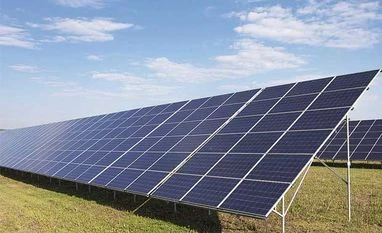 "Gujarat govt mulls connecting farmers using solar powered pumps to grid")


 Connect with us on WhatsApp