Weak rupee, firm alumina prices to bolster Nalco's earnings

Rupee devaluation is favouring Nalco as alumina sales contribute 46 per cent to the company's gross turnover
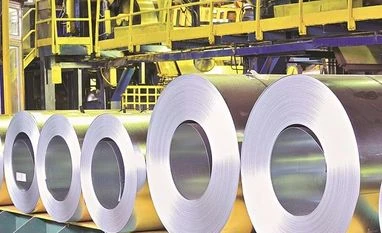
Nalco rides on London Metal Exchange gains, sees room for more price hikes
Jayajit Dash Bhubaneswar
Last Updated : Aug 28 2018 | 6:58 AM IST
A subdued rupee and the firming up of international alumina prices have spelt a bonanza for state controlled National Aluminium Company (Nalco). Since Nalco exports nearly 1.3 million tonnes alumina each year, it is harvesting the gains from the commodity’s price upswings as well as the falling rupee which is piling up gains.

Rupee devaluation is favouring Nalco as alumina sales contribute 46 per cent to the company’s gross turnover. For every single point depreciation in the Indian currency vis-a-vis the US dollar, Nalco rakes in an extra net profit of Rs 130-140 million a month which effectively translates into Rs 1.57 billion per annum.

Strategically, Nalco has stayed closed to the market dynamics by opting to sell all its alumina shipments at spot prices, a departure from the usual practice of sealing long-term contracts with the buyers. Nalco’s chairman & managing director (CMD) TK Chand said, “Due to our timely supplies backed by efficient logistics and quality positioning of products, Nalco commands a premium of 10 per cent over the index price in spot alumina sales”.

Nalco despatched 10 alumina shipments during April-June quarter of this fiscal and hopes to keep the same tempo in Q2. For its last alumina shipment, Nalco’s realisation was $580.5 per tonne.

Besides rupee slump, buoyant alumina prices have been another tailwind to beef up Nalco’s earnings. Between August 1 and 15, global alumina prices rose from $530 to $581 a tonne, meaning a gain of 9.6 per cent. Price forecast for the intermediate product is bullish in the backdrop of tight supplies.

“For every $10 rise in alumina prices, Nalco straightway gains Rs 910 million net profit. For instance, when alumina prices jumped by $51 earlier this month, Nalco’s net profit is estimated to have strengthened by Rs 400 million. We believe alumina prices would in the range of $520-530 in Q2”, Chand  said.


Robust alumina prices would spur Nalco to continue its stellar financial performance. In the June quarter, Nalco logged a whopping net profit of Rs 6.87 billion, driven by strong alumina pricing. Nalco expects Ebitda (earnings before interest, taxes, depreciation and amortisation) in Q2 to improve to 26-27 per cent (of net sales) from 15 per cent in Q1.

Brokerage firm Motilal Oswal believes that Nalco’s Ebitda would increase by 71 per cent to Rs 28.4 billion in FY19, considering the strong sector tailwinds. “Nalco is likely to benefit from strong alumina prices, led by the closure of (Norsk) Hydro’s alumina facility and shutdowns at Chinese refineries. Spot alumina prices are trading above $500 per tonne versus our estimate of $450 for the remainder of FY19 and FY20. Nalco is a key beneficiary of higher alumina prices, given its net long position and advantage of low cost bauxite”, Motilal Oswal’s report on Nalco stated.

Nalco’s alumina production in the June quarter rose 11 per cent year-on-year (y-o-y) to 583,000 tonnes, it’s best ever in a quarter. Alumina sales moved up 24 per cent y-o-y with average realisation standing at $562 per tonne in the period.

Higher realisations from alumina sales will continue as the Nalco CMD sees a global shortage of 0.7-1 million tonnes in calendar 2018. The shortages are fuelled by the prevailing geopolitical and macro economic factors.


Norsk Hydro’s Alunorte refinery in Brazil, the biggest alumina complex in the world, is operating at barely 45 per cent of its rated capacity. Industry watchers believe the environment pollution curbs on the refinery are unlikely to be eased anytime soon as Brazil is headed for elections in October this year. Second, some 1600 workers at Alcoa have launched an indefinite agitation in western Australia after talks with the company management failed. Moreover, after rolling out its Blue sky policy aimed at curbing carbon emissions from industries, China  has come up with the Replacement Quota policy for aluminium smelters. As per this policy, if an existing smelter player is keen to expand, it has to surrender old capacity of equal quantum.


One subscription. Two world-class reads.

Already subscribed? Log in

Subscribe to read the full story →
*Subscribe to Business Standard digital and get complimentary access to The New York Times

Smart Quarterly

₹900

3 Months

₹300/Month

SAVE 25%

Smart Essential

₹2,700

1 Year

₹225/Month

SAVE 46%
*Complimentary New York Times access for the 2nd year will be given after 12 months

Super Saver

₹3,900

2 Years

₹162/Month

Subscribe

Renews automatically, cancel anytime

Here’s what’s included in our digital subscription plans

Exclusive premium stories online

  • Over 30 premium stories daily, handpicked by our editors

Complimentary Access to The New York Times

  • News, Games, Cooking, Audio, Wirecutter & The Athletic

Business Standard Epaper

  • Digital replica of our daily newspaper — with options to read, save, and share

Curated Newsletters

  • Insights on markets, finance, politics, tech, and more delivered to your inbox

Market Analysis & Investment Insights

  • In-depth market analysis & insights with access to The Smart Investor

Archives

  • Repository of articles and publications dating back to 1997

Ad-free Reading

  • Uninterrupted reading experience with no advertisements

Seamless Access Across All Devices

  • Access Business Standard across devices — mobile, tablet, or PC, via web or app

Next Story



