Miners body urge SC to allow export of iron-ore pellets from Karnataka

If SC decides to allow export of pellets, stated-owned KIOCL Limited would be a major beneficiary
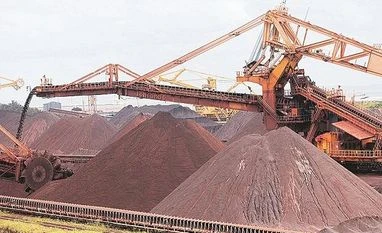
Representative image
India had produced more than 200 mt of iron ore in 2010-11
T E Narasimhan Chennai
Last Updated : Aug 27 2018 | 10:25 AM IST
The Central Empowered Committee (CEC) has recommended the export of pellets from Karnataka in accordance with the Union Steel Ministry and the Karnataka Government. If the Supreme Court (SC) decides to allow export of pellets, stated-owned KIOCL Limited would be a major beneficiary.

The apex court had earlier directed that the iron ore produced in Karnataka should be domestically consumed. This means independent pellet plants and beneficiation plants would cater only to the domestic iron and steel industry.

Federation of Indian Mineral Industries (Fimi) has appealed the court to allow the export of pellets made of iron ore. The matter is expected to be heard by the end of this month.

Its earlier plea was disallowed in 2014 as it would have caused a severe shortage of raw material as iron ore production in Karnataka was not enough that time. The SC had set the minimum capacity at 25 MT (million tonnes). However, the capacity has now crossed 35 MT with 8 C Category mines expected to add more volume. Therefore, Fimi has re-appealed the court to allow the export of pellets from Karnataka. 

SC ruling would have a serious impact on KIOCL, whose fate changed when it was asked to shut down the iron ore mine in Kudremukh in 2005. KIOCL had been operating only the EOU (Export Oriented Unit) in Mangalore converting iron ore sourced from NMDC’s Karnataka mines to pellets till 2011.

The directions requiring domestic consumption meant that KIOCL could not source material from nearby mines, including NMDC, for its EOU. Its attempt to find alternate sources like Goa was also affected by the ban on mining operations in Goa. After the apex court's order in 2011 barring export of pellets from Karnataka, KIOCL has been forced to procure iron ore from states like Chattisgarh and high-cost imports from Brazil.

It is ironical that in a state with billions of tonnes of iron ore reserves, a public sector undertaking like KIOCL is forced to import ore wasting precious Forex, says a leading miner.

With domestic prices of iron ore being lower than imported ones by almost Rs 1,600/MT, at full volume of 3.2MT, KIOCL will save almost Rs 55 billion in sourcing iron ore, says an official.

With the capacity now exceeding 35MT and with tight monitoring and control systems for iron ore movement preventing any illegal mining, it is widely expected that some ease will flow through in the way of doing business.

One subscription. Two world-class reads.

Already subscribed? Log in

Subscribe to read the full story →
*Subscribe to Business Standard digital and get complimentary access to The New York Times

Smart Quarterly

₹900

3 Months

₹300/Month

SAVE 25%

Smart Essential

₹2,700

1 Year

₹225/Month

SAVE 46%
*Complimentary New York Times access for the 2nd year will be given after 12 months

Super Saver

₹3,900

2 Years

₹162/Month

Subscribe

Renews automatically, cancel anytime

Here’s what’s included in our digital subscription plans

Exclusive premium stories online

  • Over 30 premium stories daily, handpicked by our editors

Complimentary Access to The New York Times

  • News, Games, Cooking, Audio, Wirecutter & The Athletic

Business Standard Epaper

  • Digital replica of our daily newspaper — with options to read, save, and share

Curated Newsletters

  • Insights on markets, finance, politics, tech, and more delivered to your inbox

Market Analysis & Investment Insights

  • In-depth market analysis & insights with access to The Smart Investor

Archives

  • Repository of articles and publications dating back to 1997

Ad-free Reading

  • Uninterrupted reading experience with no advertisements

Seamless Access Across All Devices

  • Access Business Standard across devices — mobile, tablet, or PC, via web or app

Next Story



