Is India’s trade with Hong Kong part of its trade with China? India and its largest trading partner, China, have different views on this, adding to the data discrepancy of about $5 billion in the merchandise trade between the two countries during 2016.
Hong Kong, a former British colony, became a special administrative region of China in 1997, when Britain’s 99-year lease expired. Hong Kong is governed with the principle of “one country, two systems”, under which China has given the region autonomy, and agreed to preserve its economic and social systems for 50 years from the date of the handover.
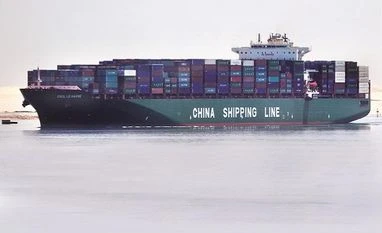
Though Hong Kong acts as China’s main transit destination, it was found that in-transit trade is leading to discrepancy in data. For, India would report the country of consignment for the import as Hong Kong, instead of China, and China would report the country of destination as India. According to China’s import statistics, 25.8 per cent of India’s exports in 2016 came into China via Hong Kong.
Source: Commerce ministry
The basic trade numbers and why they do not match came for discussion during a review meeting of the joint working group (JWG) between the two countries earlier this week. This was the first meeting after the Doklam military stand-off. The group reviewed statistical systems and methodologies adopted by the two countries, based on a mechanism agreed upon in 2013. It agreed to reconcile the data, to remove the discrepancies.
Beside statistical review, early convening of the 11th joint economic group (JEG) in the first quarter of 2018 was discussed. The JEG has not met since 2015. This week’s JWG meeting is, therefore, seen as a precursor to a ministerial-level meet. Prime Minister Narendra Modi in September visited China for the BRICS countries’ summit, after the two countries ended a stand-off in Doklam.
A major source of discrepancy is in electrical machinery, equipment, sound recorders and reproducers, television image and sound recorders and reproducers, and their parts and accessories, which are imported into India.
Officials said the bilateral discrepancy in data has been declining since 2012. It was $7 billion in 2015 and $5 billion in 2016, after it had touched $12 billion in 2008, from $4 billion over a three-year period to 2007. In 2016, the total of discrepancies represents 7.2 per cent of the total trade recorded by China, decreasing from 26.8 per cent in 2004. The total of discrepancies represents 7.2 per cent of the total trade recorded by India in 2016, decreasing from 36.1 per cent in 2004.
The Chinese side maintains data both at the destination and the port of disembarkment or embarkment, while India recorded it only for destination.
Another reason for discrepancy in the data is that China records import on a cost insurance and freight basis, which includes transport and insurance costs between the two countries. India records export on a free on board basis, excluding the two charges.
In the case of direct trade, the export price which traders declared to Chinese customs is the intermediate purchase price, which is lower, while the import price declared to Indian customs is the intermediate selling price after mark-up, which is higher. This resulted in the Chinese export value of some commodities to be lower than the corresponding India import value.
There was also a time lag in transporting commodities exported from India at the end of a calendar year, reported by China as import only in the subsequent year.
Besides, India in certain cases reported an export to China which was not recorded by China as an import, due to the goods not arriving there. This occurs when the final destination of the export changes while on-route and the export declaration is not updated accordingly.

 "Hong Kong and more play Chinese checkers with trade data")











