How the Ayushman Bharat Yojana will embrace all citizens, not just 500 mn

Govt plans to overhaul 150,000 centres across India, to provide free diagnostics and medicines addressing both, non-communicable and lifestyle diseases, to each and every Indian

Rajani Ved
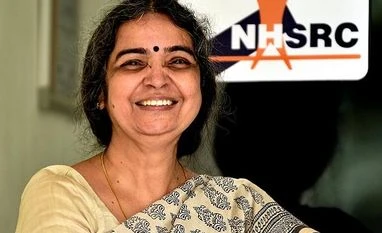
Dr Rajani Ved of NHSRC. Photo: Dalip Kumar
Gina Krishnan New Delhi
Last Updated : Sep 17 2018 | 8:01 PM IST
Ayushman Bharat Yojana, the ambitious initiative to move towards Universal Health Coverage (UHC), has kicked off. While the insurance initiative has attracted a lot of attention, little is known about the mechanism that will help reach comprehensive primary care to citizens across the country. 

“Ayushman Bharat has two components. The first is Health and Wellness Centres (HWCs) for delivery of comprehensive primary health. The other is the secondary and tertiary care component, which will be offered through the Prime Minister’s Jan Arogya Yojana (PMJAY).” says Rajani Ved, executive director, National Health Systems Resource Centre. While the insurance component covers 500 million people at the lower half of the economic ladder, the HWCs will offer free care to every citizen in the country.

The insurance component has garnered a lot of publicity, while the staggered rollout of 150,000 HWCs by 2022 has been below the radar.

The plan is to upgrade the existing 125,000 sub-centres, each covering a population of 3,000-5,000 people, and about 30,000 primary health centres, which cover about 30,000 people each across the country into Health and Wellness Centres, in order to offer comprehensive primary care for all. The plan is to include diagnostic services and essential drugs free of cost.

The backbone of Universal Health Coverage

National Sample Survey Office (NSSO) data shows that only 11 per cent of the existing sub-centres and PHCs in rural areas and three per cent in urban areas have been offering services other than childbirth and delivery. In other words, very few of the other health care services are being delivered within this huge network of centres. “We have staff there, 80-90 per cent of them (the centres) already have buildings,” says Ved.

Currently, a Primary Health Centre has one or two doctors, a nurse, a lab technician and a pharmacist, while a sub-centre is currently manned by one or two auxiliary nurses and midwives (ANM).

There is going to be paradigm shift in offering service at these centres, both prevention and promotion, in which a team approach is being taken.  Earlier prevention and health promotion was limited to immunisation and mother-and-child health (MCH). Now the focus is on promotion and prevention in the area of non-communicable and lifestyle diseases, so interventions will be comprehensive at the primary care level. 

A Health and Wellness Centre

The sub-centre level HWC, which serves a population of 3,000-5,000, will have a mid-level provider who will be above the level of an ANM. Such a person could be a nurse practitioner, a General Nursing and Midwiferyor a B.Sc, nursing professional or ayurvedic doctor who has put in four-and-a-half years of training. Such people then get six months’ training in primary health and public health through a certificate course conducted by IGNOU. They will work as community health workers.

At the PHC level which services a population of about 30,000 people, the health workers will handle slightly more complex conditions. They will be headed by an MBBS doctor and will be supported by other staff.

Instead of just one or two workers, a team approach has been planned, with each one having clear roles and responsibilities. The Accredited Social Health Activists(ASHAs) approach will primarily be to expand on what they are already doing to include enumerating the population, identifying the target group, and mobilising them to come to the centres for screening of NCDs.  This is because primary health care also embraces early detection of conditions such as hypertension, diabetes, common cancer or visual impairment. The ASHAs will promote lifestyle changes focusing on reducing tobacco and alcohol consumption, and encouraging nutrition, physical activity, support for treatment adherence in chronic diseases, in addition to Mother and Child Health, family planning and infectious disease management. They will provide services through outreach visits. The mid-level providers at the HWC will be trained to provide therapeutic care for a range of conditions, refer to the medical officer for chronic diseases so the patient can obtain a treatment plan.

“Right now, we do not provide medicines for chronic diseases at the sub-centre level. However, medicines soon will be made available free of cost for all chronic diseases at the Health and Wellness Centres. This is already happening in in some states where the centres have become operational, such as Chhattisgarh, Punjab, Karnataka, Tamil Nadu and Assam,” adds Ved.

The IT infrastructure

Recognising the need for a strong IT system, the ASHAS are getting smart phones, and mid-level workers are getting tablets, while the PHC already has a computer. They are all being linked to a comprehensive primary healthcare IT system, from patient registration to getting the diagnosis to prescription.  All patient activity, with his or her unique ID will be online and linked to enable continuum of care.  

The IT infrastructure is being built with support from the Dell Foundation and Tata Trusts pro bono. NIC is the facilitation agency.

Pillars of care

Focus on mother-and-child health, adolescent care, geriatric care, yoga, naturopathy, telehealth and consultation will continue. Apart from this, all citizens in the 30-plus age group will be screened for hypertension, diabetes, common cancers -- breast, cervix and oral -- so the HWC can develop a knowledge partnership and community engagement and make good use of diagnostics and free dispensation of medication.

The point-of-care diagnostics at the sub-centres will be in-house while at the PHCs, it could be both in-house or a PPP arrangement, using hub-and-spoke models, under which samples are sent to a centralised lab and results are communicated electronically.

Investment 

An amount of Rs 12 billion has been allocated by the Union Government for upgradation and setting up the infrastructure in the Health and Wellness Centres, while the states’ share will be another Rs eight billion for 2018-19. Each centre  needs an investment of around Rs 900,000 as capital upgradation and another Rs 900,000 for running cost, apart from investments in diagnostics and free essential drugs for emergencies and chronic treatment at the community level. “The rollout has been planned in a staggered manner, and this investment is for current year. About 15,000 HWCs will be operational by March 2019,” says Jhalani, adding that 2,300 of them are ready, with the first model centre being inaugurated earlier this year at Jangla, Chattisgarh. “There will be a further allocation in the subsequent years,” adds Ved.  All 150,000 centres will be operational by December 2022.

One subscription. Two world-class reads.

Already subscribed? Log in

Subscribe to read the full story →
*Subscribe to Business Standard digital and get complimentary access to The New York Times

Smart Quarterly

₹900

3 Months

₹300/Month

SAVE 25%

Smart Essential

₹2,700

1 Year

₹225/Month

SAVE 46%
*Complimentary New York Times access for the 2nd year will be given after 12 months

Super Saver

₹3,900

2 Years

₹162/Month

Subscribe

Renews automatically, cancel anytime

Here’s what’s included in our digital subscription plans

Exclusive premium stories online

  • Over 30 premium stories daily, handpicked by our editors

Complimentary Access to The New York Times

  • News, Games, Cooking, Audio, Wirecutter & The Athletic

Business Standard Epaper

  • Digital replica of our daily newspaper — with options to read, save, and share

Curated Newsletters

  • Insights on markets, finance, politics, tech, and more delivered to your inbox

Market Analysis & Investment Insights

  • In-depth market analysis & insights with access to The Smart Investor

Archives

  • Repository of articles and publications dating back to 1997

Ad-free Reading

  • Uninterrupted reading experience with no advertisements

Seamless Access Across All Devices

  • Access Business Standard across devices — mobile, tablet, or PC, via web or app

Next Story