If inflation is 7-10%, lending rates can't be less than 12-14%: Rakesh Mohan
Interview with India's representative in IMF
Indivjal Dhasmana The International Monetary Fund (IMF) recently attributed India's economic slowdown largely to domestic factors.
Rakesh Mohan, India's representative in IMF, tells
Indivjal Dhasmana the assessment by IMF is not very different from the government's thinking. The former RBI deputy governor, in New Delhi recently, also talks about the prospects of an economic revival, reforms in IMF, etc. Edited excerpts:
In its assessment report on India, IMF said domestic factors primarily led to economic slowdown, with global factors playing a small role. Do you concur? I don't think the IMF's assessment has been that different from what the Government of India has itself been saying, although it does give a somewhat smaller weight to global factors. There is clearly an impact of the global economic slowdown on almost every country. Coming back to India, we were able to counter the immediate impact of the North Atlantic financial crisis of 2008-09 (I don't call it global financial crisis) by doing relatively rapid action on a co-ordinated fiscal and monetary stimulus at that time. The stimulus measures were excessive, at least with hindsight. So, we got relatively high growth in 2009-10, 2010-11 and 2011-12. But a significant growth slowdown has taken place over the past two years.
What could be the reasons? With high fiscal deficit, government borrowing has been high, which has crowded out the private sector. High fiscal deficits have also had some impact on inflation. You can't bring interest rates down if inflation is high. If you have seven, eight, nine, or 10 per cent inflation, then banks cannot reduce deposit rates to levels much below the inflation levels. Thus, regardless of the monetary policy stance, you can't have lending rates less than 12-14 per cent in such circumstances. High nominal interest rates appear to have impacted private corporate sector activity significantly. Thus a revival of growth is difficult to envisage without a sustained fall in inflation and hence interest rates.
So, are we not on course for a revival? The point is that we have been through such a slowdown before in 1997-2002, and we made appropriate policy corrections to rekindle growth. There appears to be systemic capacity to make such corrections when pressed. Last summer, when we had difficulty in relation to the widening current account deficit and consequent rapid capital outflows after the indication by the US of tapering of their monetary policy, we acted fast. The current account has been corrected, the exchange rate stabilised, and capital flows have resumed.
However, the growth trajectory is on a decline and manufacturing is yet to revive... The most serious issue with regard to the slowdown is the collapse of manufacturing growth, which has been near-zero for two years. It is not possible to restore sustainable growth to the seven-to-nine per cent levels achieved earlier unless the manufacturing sector is revived and is then able to grow at a yearly rate of near 10 per cent over a significant period of time.
That is how the successful east Asian nations have achieved middle- and high-income status, with such growth over the past few decades. What is striking is the lack of discussion on this issue in the country, either in policy circles or in the private sector. What is also symbolic to me is that in the CII (Confederation of Indian Industry) agenda for its annual conference (which I recently attended), there was neither a session on manufacturing nor any discussion. And this is Confederation of Indian Industry! Similarly, it is notable that in 2013, each of the national business chambers were led by CEOs from the service sector. The reform process in 1991 was begun with the idea of unshackling industry from the licence permit raj. This has mostly been accomplished. So, why has manufacturing growth ground to a halt? The point is, we need to acknowledge the problem and introspect on why this has happened.
This is also an opportune time to design policies in support of labour-using manufacturing because we can expect a widespread massive shift of such industry from China over the next decade as their wages rise. India must be positioned to take advantage of this transition.
A committee under you has recommended setting up of a unified transport ministry. Is it feasible? Look at it this way. If no other significant country in the world has a proliferation of ministries in the transport sector, why do you think it is not feasible in this country?
In the past, mostly socialist and communist countries had a ministry for each sector. Now, even Russia and China have unified ministries of transport. We recognise the political difficulty in our country in setting up such a unified ministry. So, we said it is a medium-term objective. If there can be a large unified Ministry of Finance with a number of departments in it, why not a unified Ministry of Transport? In the meantime, we suggested setting up of an Office of Transport Strategy, to be set up as an independent technical body attached to the Planning Commission, just as an Independent Evaluation Office which was set up. What is important is that we need much greater technical expertise to design transport strategy in an integrated manner across the modes. We need to move away from our project-centric silo mentality that characterises our current approach. The recently-released Report of the National Transport Development Policy Committee should be read to understand the nuances behind this recommendation. It is also available on the Planning Commission website.
The US Congress has not again taken up its support to IMF reforms. What will be the relevance of the Fund in these times, if reforms are not undertaken? The US administration tried hard to get the IMF reform passed by the US Congress along with the Ukraine aid package. The latest news is that it has decided to de-link it from the Ukraine package. Now, we don't know if and when it will come up again in the US Congress.
I believe this reform is very important for the future credibility and effectiveness of the IMF and for the global monetary system in the future. I hope the US Congress acts on it.

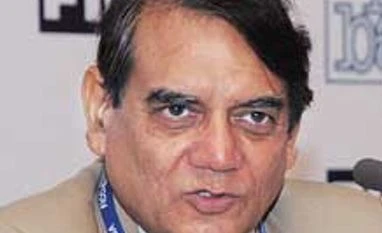 "If inflation is 7-10%, lending rates can't be less than 12-14%: Rakesh Mohan")

