In the past few years, Indian builders have been known to hold property shows all across the world between January and March. These shows are held to attract non-resident Indians (NRIs) into buying property in India. And a falling rupee against the dollar, down 26.5 per cent in five years, makes buying more attractive for NRIs.
According to Square Yards, a consultancy that deals with NRI investors, the total investment by NRIs in the primary residential market in India's top eight cities stood at $9.6 billion in 2016. The consultancy expects this figure to touch $11.5 billion in 2017, accounting for about 19 per cent of the total market, currently estimated at $60 billion.
A major factor driving their purchase of real estate in India is familiarity bias: Since NRIs are familiar with the country, they prefer investing here, and, of course, a stronger currency that makes buying in
India easier.
Also, countries like the United Arab Emirates (UAE) don’t offer citizenship, so those working there know that they may have to return to India at the end of their professional lives. Similarly, acquiring citizenship is also becoming more difficult in the US and the UK. “Strong economic growth, declining home loan interest rates, and a depreciating currency also create a pull factor,” says Bhaskar Bagchi, chief business officer, PropTiger.com.
And thanks to the Internet, information about developers and projects has become easily available online. Many developers and real estate marketing companies have set up offices in countries with large NRI populations.
NRIs investing in the Indian market should, however, understand fully the risks of investing in this asset class before taking
the plunge.
PRE-PURCHASE STAGE
If buying for investment purpose: The ongoing slowdown in the real estate market offers opportunities. “NRIs can pick up properties at reasonable prices and also take advantage of the discounts and payment plans being offered by developers,” says Anupam Rastogi, principal partner, Square Yards. However, NRIs should not expect quick returns but should have an investment horizon of at least 7-10 years.
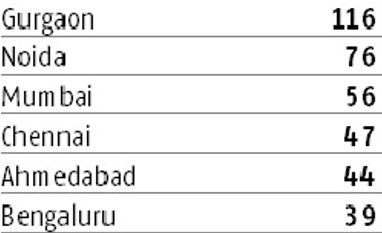
NRIs also need to avoid ‘recency bias’ — investing in real estate because the asset class enjoyed a bull run between 2004 and 2014, barring a one-year hiccup after the 2008 financial crisis. Currently, however, excess inventory has been created in most major cities (see table). “Large unsold inventory is a sign that prices may not appreciate for a few years,” says Vishal Dhawan, chief financial planner, Plan Ahead Wealth Advisors.
NRIs planning to rent out the property should take into account the rental yield. The amount may appear high in absolute terms but as a percentage of capital value it doesn't exceed two-three per cent in most cities. NRIs should also be aware of currency risk which could result in gain or loss. How the exchange rate moves varies from one currency to another and also from one period to another.
If buying for end-use: Sometimes, NRIs buy a house in India much before they will actually use it. If the gap is long, their needs could change. While they may have bought a two-bedroom apartment in Bengaluru because they worked in the city prior to moving abroad, they may end up wanting to live in Kolkata when they actually retire, to be closer to their relatives. By then, if their standard of living has risen, they may want a four-bedroom apartment instead of two. “Avoid buying more than a couple of years prior to actual need,” says Dhawan.
PURCHASING PHASE
Time constraint: One constraint that NRIs face is that they have to finalise a deal within the limited period for which they are here in India. “It limits the amount of due diligence they can do prior to purchase,” says Ashutosh Limaye, national director-research, JLL India.
Most NRIs do research on the internet about various developers and projects prior to their visit. However, research done on the internet has limited reliability. “There is very little accurate information available online on the past performance of developers, so NRIs may end up choosing someone of low credibility and inferior quality,” warns Bagchi. Get your friends and relatives to look up properties on your behalf and do the due diligence on developers.
Due to lack of time, NRIs are unable to counter-check every piece of information they are offered. The credibility of the agency or person helping them hence becomes crucial. “NRIs should interact only with reputed real estate marketing consultants,” suggests Rastogi.
If unsure, stick to top builders: “This reduces the margin of error substantially. Before coming to India, correspond with the developer and go with the one that is more open in its communication,” says Limaye.
NRIs need to conduct a few checks before zeroing in on a developer. The project should not be dogged by legal issues. Ownership of the plot should not be disputed and there should be no violation of land usage. “Ask for the title documents and have a local lawyer do the checks,” advises S G Raja Sekharan, who teaches wealth management at Bengaluru's Christ University. It must be ensured that the developer complies with all the bylaws and building permission. His track record regarding timely completion of projects and delivering the quality he had promised needs to be checked. Equally significant is his financial strength. “The developer should not be heavily indebted or else he will not be able to deliver the project on time,” says Amit Mishra (name changed on request), an Oman-based NRI who had invested in a project in the NCR that has got delayed by three years. A ready-to-move-in property is a safer bet. NRIs should also get a good approximation of market rates and learn about ongoing discounts and payment options to be able to negotiate prices effectively. A new risk that has arisen is some developers packaging real estate as a financial investment and offering assured returns.
POST-PURCHASE ISSUES
Managing the property: Given the paucity of good property management firms, it is not an easy task. If you depend on an elderly family member, say, your father to manage it, he may not be able to do so after a while due to advancing age. “Have at least two options for managing the asset,” says Dhawan.
Finally, real estate is an illiquid asset, more so when the market is not doing well. NRIs may find it difficult to dispose of their property, if they wish to, even though they may be willing to offer a discount.