If you are an H-1B visa holder, switching jobs in the US just got tougher

Many workers are ultimately denied an H-1B visa months after they win the lottery, typically on the grounds that their jobs aren't considered "specialty occupations."
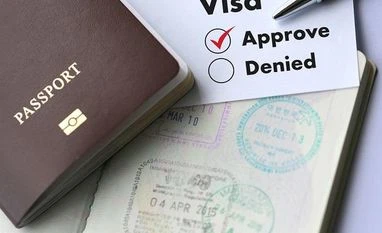
visa
More than half of the H-1B cases nowadays are stalled by 'requests for evidence', or RFEs, a complicated request for additional documents that can take months to resolve and often end in denials.
BS Web Team
4 min read Last Updated : Apr 29 2019 | 10:54 AM IST
It is getting tougher for H-1B visa holders in the US to switch jobs even if the new job is similar to the old and requires the same exact skill sets. 

According to a report in Times of India, the US citizenship and Immigration Services ( USCIS) has denied several applications by the new employer  by citing that the new position does not constitute a 'specialty occupation.' Moreover, if the H-1B holders starts working elsewhere and the transfer is denied, the person could be 'out of status' with a bar on entry into the US for three to ten years, unless the old employer is willing to take back the worker.

“Typically, there is no grace period if the H-1B status has already expired by the time the denial intimation is received. If, however, there is time remaining on the original H-1B approval with the old employer, the beneficiary will have a 60-day grace period or the time remaining on the original approval, whichever is," Times of India quoted Rajiv S Khanna, managing attorney at Immigration.com, as saying.

So what exactly is a specialty occupation? H-1B visas are granted to persons trained and employed in specialty occupations. Many of the 'Requests for Evidence' received by over 25% of H-1B petitions involve the question as to whether or not the position meets the criteria of a specialty occupation.

The Code of Federal Regulation says a specialty occupation requires 'Theoretical and practical application of a highly specialized body of knowledge,and attainment of a bachelor’s or higher degree in a specific specialty as a minimum for entry into the occupation'. Examples include those professions involving science, technology, engineering, and mathematics or STEM.

The US tech sector predominately hires H-1B workers and a large chunk are from India.However, according to a recent analysis by the National Foundation for American Policy, the denial rate for applicants  who are trying to extend their visas grew from 4 percent in 2016 to 12 percent in 2018. ( Read more here)
 
Moreover, more than half of the H-1B cases nowadays are stalled by 'requests for evidence', or RFEs, a complicated request for additional documents that can take months to resolve and often end in denials. ( Read more here) 

Another study by VisaGuide.world found that the US immigration agency officials are more likely to issue a Request for Evidence (RFE) to Indian H1B visa applicants than to people from other countries, Business Standard reported on Sunday. 

According to the data collected by the web portal, 72.4 per cent of Indian applicants and 61.2 per cent of applicants from the rest of the world received an RFE.

In 2018, 309,986 applications for H1B visa, or 73.9 per cent of the total H1B applications for the year, were from India.

The H1B work visa has been the preferred visa for Indian IT companies and has helped them keep costs down and gain a margin advantage over multinational players by sending engineers to the US. However, IT services firms have been accused of misusing the lottery-based system, which allows 65,000 visas for the general category and an additional 20,000 to those with a US Master’s degree from an accredited institution.

The portal expects Indians to continue to account for the highest number of applicants this year and the number of women applicants to increase because of the risks for H4 visa holders. A number of potential H4 visa holders may turn to the H1B visa programme, as a way to join their spouses working in the US, it said. ( You can read the entire Business Standard article here) 

One subscription. Two world-class reads.

Already subscribed? Log in

Subscribe to read the full story →
*Subscribe to Business Standard digital and get complimentary access to The New York Times

Smart Quarterly

₹900

3 Months

₹300/Month

SAVE 25%

Smart Essential

₹2,700

1 Year

₹225/Month

SAVE 46%
*Complimentary New York Times access for the 2nd year will be given after 12 months

Super Saver

₹3,900

2 Years

₹162/Month

Subscribe

Renews automatically, cancel anytime

Here’s what’s included in our digital subscription plans

Exclusive premium stories online

  • Over 30 premium stories daily, handpicked by our editors

Complimentary Access to The New York Times

  • News, Games, Cooking, Audio, Wirecutter & The Athletic

Business Standard Epaper

  • Digital replica of our daily newspaper — with options to read, save, and share

Curated Newsletters

  • Insights on markets, finance, politics, tech, and more delivered to your inbox

Market Analysis & Investment Insights

  • In-depth market analysis & insights with access to The Smart Investor

Archives

  • Repository of articles and publications dating back to 1997

Ad-free Reading

  • Uninterrupted reading experience with no advertisements

Seamless Access Across All Devices

  • Access Business Standard across devices — mobile, tablet, or PC, via web or app

Next Story



