India likely to soften stand on food security issue at WTO
As per the WTO norms, a developing nation can provide food subsidy of up to 10% of the total farm output
Press Trust of India New Delhi India, which is implementing an ambitious food security plan, may finally agree to a WTO proposal that will give immunity from penalty only for four years for breaching the food subsidy cap.
If India agrees to four-year tenure it could be seen as softening of stand as the country has been demanding an eight-year 'peace clause', which refers to the time limit up to which food subsidy can continue without attracting penalty under WTO norms even if 10% cap is breached.
As per the WTO norms, a developing nation can provide food subsidy of up to 10% of the total farm output.
The issue is scheduled to be discussed in the Cabinet Committee on WTO which is meeting on Monday.
According to top sources, the Commerce Ministry has proposed that the draft WTO ministerial decision may be supported as India's concerns have been more or less addressed in the draft text on interim solution to public stock-holding for food security purposes.
A ministerial draft has been tabled in the WTO which seeks to postpone action for breach of the subsidy limit of 10% for four years or till the 11th Ministerial Conference.
However, the group of 46 developing nations is demanding that the 'peace clause' --should be 8 years.
Developed countries like the US and Canada have raised concerns over India's food security legislation at the World Trade Organisation (WTO). They have asked India to explain the effect of the law on global stocks and commodity prices.
It is feared that the 10% norm could be breached after the full implementation of the Food Security Act, which entitles 82 crore people to 5 kgs of foodgrain per person in a month at the rate of Rs 1-3 per kg. The country needs 62 million tonnes of foodgrain in a year to implement the law.
The 9th WTO Ministerial Conference will be held in Bali from December 3-6.
The top most decision-making body of the WTO is the Ministerial Conference, which usually meets every two years.
Meanwhile, Commerce and Industry Minister Anand Sharma held a meeting with European Commission Vice President Joaquin Almunia. The Minister is said to have conveyed to the visiting official that on the issue of India of food security we have to find a way which does not come in the way of providing food security.

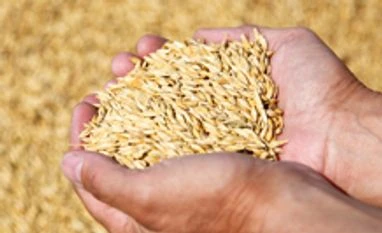 "India likely to soften stand on food security issue at WTO")


 Connect with us on WhatsApp