India reduces duties on 3,142 imports from China, Asia-Pacific nations

The reduction in tariff by both nations are part of their commitments to liberalise trade further through the Asia Pacific Trade Agreemment (APTA) and will be in effect from July 1

Graph
Subhayan Chakraborty New Delhi
4 min read Last Updated : Jul 03 2018 | 1:07 AM IST
In a move set to boost India-China trade, the government on Monday announced the slashing of import duties on as many as 3,142 items from China and 5 other nations from the Asia Pacific, days after Beijing had done the same for more than 8500 items.

The reduction in tariff by both nations are part of their commitments to liberalise trade further through the Asia Pacific Trade Agreemment (APTA) and will be in effect from July 1. This is expected to reduce the trade exposure of both nations to the United States and has come at a time when the Donald Trump administration continues to threat both nations with high tariffs and reduced market access in the form of 'reciprocal tariffs'.

India signed the APTA, the oldest preferential trade agreement among countries in the Asia-Pacific region, back n 1975. There has not been much movement in expanding the agreement since then. Apart from China, India's trade with South Korea, Sri Lanka, Bangladesh and Laos is set to improve as result of the latest tariff reduction which was decided upon by the APTA ministerial council back on 4 January 2017.

Senior Commerce Department officials indicated that the decision to implement the decisions a year and a half later is part of a calculated move by both New Delhi and Beijing to counter Trump's aggressive stance on trance.

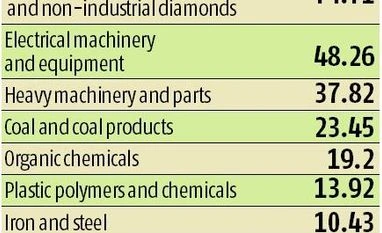
"With the implementation of the fourth round, the coverage of prefarances of total tariff lines for each member would come to 10,677 tariff lines ( up from 4,270 items at the conclusion of the third round) and deepen the average Margin of Preference (MoP) being provided under the agreement to 31.52 per cent," a statement by the Commerce Department said.

However, despite the reduction in tariffs, other problems continue to derail India's plans to boost exports to China. Barriers to trade remain high, especially those that are non-tariff in nature. This has been true for the pharmaceutical sector, considered to be one of the most ambitious by New Delhi and shortlisted by Beijing for reducing import duties.

“China is a state enterprise-driven economy and most imports continue to be ordered by state companies. Issues of market access, primarily in agricultural commodities and pharma products, remain. These have to be addressed,” Ajay Sahai, director-general of the Federation of Indian Export Organisations, said.

“The APTA has been working for many decades but the items covered under it have been small. China's decision to expand it will help exports from other nations. But, this is a consequence of China's trade partners pressurizing them to import more. This will reduce trade deficit.” Sahai added.

On Sunday, other tariff cuts announced by China earlier this year also came into force including tariffs on automobiles and consumer items such as food. 

Chinese media outlets reported that in the fifth round of tariff cuts undertaken by Beijing since 2015, import duties on 1,449 consumer goods have been reduced from an average rate of 15.7 per cent to 6.9 per cent. According to China's Customs Tariff Commission of the State Council, this list includes home appliances, food and beverage, cosmetics and medicines.

“There has not been much negotiation on the APTA as preferential tariffs have become less important,” Biswajit Dhar, trade expert and professor at Jawaharlal Nehru University, said.

He added this was because of more comprehensive trade deals, such as the Regional Comprehensive Economic Partnership (RCEP). With import tariff rates dropping, the margin of preference does not matter much when nations are discussing free trade deals such as the RCEP. With different norms and rules of origin, trade will become complicated for exporters, added Dhar.

In March, India and China had agreed to reduce India's trade deficit of $62.903 billion with its northern neighbour. It was decided that non-tariff barriers would be identified in specific sectors and removed.

One subscription. Two world-class reads.

Already subscribed? Log in

Subscribe to read the full story →
*Subscribe to Business Standard digital and get complimentary access to The New York Times

Smart Quarterly

₹900

3 Months

₹300/Month

SAVE 25%

Smart Essential

₹2,700

1 Year

₹225/Month

SAVE 46%
*Complimentary New York Times access for the 2nd year will be given after 12 months

Super Saver

₹3,900

2 Years

₹162/Month

Subscribe

Renews automatically, cancel anytime

Here’s what’s included in our digital subscription plans

Exclusive premium stories online

  • Over 30 premium stories daily, handpicked by our editors

Complimentary Access to The New York Times

  • News, Games, Cooking, Audio, Wirecutter & The Athletic

Business Standard Epaper

  • Digital replica of our daily newspaper — with options to read, save, and share

Curated Newsletters

  • Insights on markets, finance, politics, tech, and more delivered to your inbox

Market Analysis & Investment Insights

  • In-depth market analysis & insights with access to The Smart Investor

Archives

  • Repository of articles and publications dating back to 1997

Ad-free Reading

  • Uninterrupted reading experience with no advertisements

Seamless Access Across All Devices

  • Access Business Standard across devices — mobile, tablet, or PC, via web or app

Topics :India China relations

Next Story





