
India's new Mundra LNG terminal ramps up utilisation as demand rises
The terminal is currently connected to Anjar in southern Kutch -- which is about 40 kilometres away from Kandla port -- through a gas pipeline that has a diameter of 32-inches
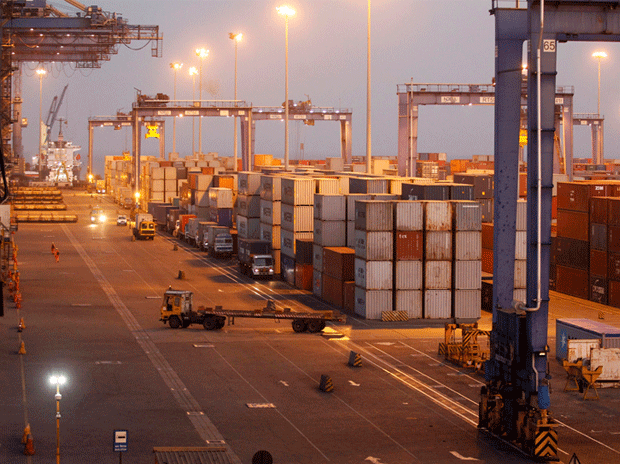 "India's new Mundra LNG terminal ramps up utilisation as demand rises")
WebinarsNew
Deep DiveNew
Explore Business Standard
The terminal is currently connected to Anjar in southern Kutch -- which is about 40 kilometres away from Kandla port -- through a gas pipeline that has a diameter of 32-inches
By Jessica Jaganathan and Sumit Khanna
SINGAPORE/AHMEDABAD (Reuters) - Having begun operations earlier this year, India's new liquefied natural gas (LNG) import terminal at Mundra is expected to boost utilisation from 45% currently to 55% within four to six months, a senior company official said on Friday.
Jointly owned by Gujarat State Petroleum Corp (GSPC) and Adani Group through GSPC LNG, the terminal in Gujarat has annual capacity of five million tonnes, and its current throughput is running at over 2.2 million tonnes per annum (mtpa), GSPC's managing director Sanjeev Kumar told Reuters.
The terminal is currently connected to Anjar in southern Kutch -- which is about 40 kilometres away from Kandla port -- through a gas pipeline that has a diameter of 32-inches.
Another pipeline connecting Anjar to Banaskantha district in Gujarat only has a diameter of 18-inches, which limits the terminal's utilisation.
To increase offtake from the terminal, Gujarat State Petronet Limited (GSPL) plans to lay an additional 300-350 kilometre pipeline connecting Anjar to Banaskantha, Kumar said. Once regulatory approvals are granted, it will take about two years before the pipeline will be ready, he added.
Meanwhile, in order to meet a rise in domestic gas demand, GSPL will set up a compressor at Anjar in Kutch, which will increase the terminal's capacity utilisation to about 2.7 mtpa or 55%.
"Tenders will be invited for the compressor soon, and we expect it to be completed in 4-6 months," Kumar said, declining to specify the estimated cost of the pipeline and the compressor.
The use of the terminal had ramped up quickly due to a surge in domestic gas demand as low Asian LNG spot prices aided a switch to gas-based power, two India-based sources said.
"There is booming demand from city gas distribution (CGD) sectors while ceramic industries have also got a boost from export orders," one of the sources said.
The Mundra terminal has imported 20 cargoes so far, through long-term and spot market, with an average of 2 to 3 cargoes per month, and expects this to continue until the compressor is set up, a second source said.
(Reporting by Jessica Jaganathan in Singapore and Sumit Khanna in Ahmedabad; Editing by Simon Cameron-Moore)
(Only the headline and picture of this report may have been reworked by the Business Standard staff; the rest of the content is auto-generated from a syndicated feed.)
First Published: Oct 23 2020 | 7:02 PM IST

