Indian businesses fear lingering economic aftershocks from Modi's note ban

Noteban has developed a psychology among customers to spend only on essential items
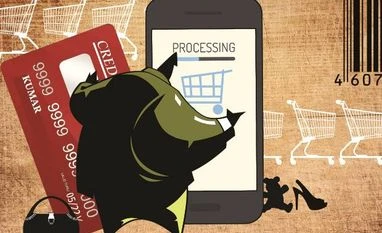
Digitisation, swipe, demonetisation
.
Reuters
Last Updated : Feb 28 2017 | 8:50 AM IST
Struggling with customers unable to pay on time and plummeting sales, Indian small-business owner Ravi Jain fears the government's crackdown on cash will have a much larger impact than predicted by top policymakers.

Jain's bath taps manufacturing firm Supreme, along with many other Indian businesses, has been shaken by New Delhi's shock decision last November to scrap 86 percent of the cash in circulation. And it wasn't certain when things will get back to normal as much depends on a revival in consumer spending.

"Demonetisation has developed a psychology among customers to spend only on essential items," Jain told Reuters from his factory on the outskirts of the Indian capital.

"We expect the cash situation to become normal in a couple of months, but we don't know when this psychology will change."

Asia's third-largest economy is tipped to slow down to a near three-year low in the October-December period, losing the title of the world's fastest-growing major economy to China.

The median estimate from a Reuters poll showed economists expect economic growth to slip to 6.4 percent in the last quarter, lower than China's 6.8 percent in the same period and slower than a 7.3 percent annual expansion in the September quarter.

The data is due on Tuesday at 1200 GMT.

TEMPORARY PAIN

Prime Minister Narendra Modi's currency ban, aimed at fighting tax evasion, corruption and forgery, had caused huge disruption to daily life, leaving farmers, traders and companies - reliant on cash transactions - in disarray.

Chief Economic Adviser Arvind Subramanian last month said the official GDP figures may not fully reflect the "real and significant hardships" experienced by the informal sector, in which an estimated nine out of 10 Indian workers are employed.

But the pain, policymakers promised, will be short-lived.

The Reserve Bank of India (RBI) has called the slowdown a transitory phenomenon and expects a sharp rebound in economic growth in the next fiscal year as cash conditions improve.

That confidence prompted the central bank to keep interest rates on hold this month and shift its monetary policy stance to "neutral" from "accommodative", signalling the end of the monetary-easing cycle.

To be sure, the cash situation is improving gradually.

Currency in circulation increased to 7.2 percent of GDP in mid-February from 5.9 percent in early January, the central bank data showed. But it was lower than the 12 percent ratio before the cash crackdown began.

With the cash situation still not back to normal and weak consumer confidence, many economists predict the aftershocks of Modi's move will linger for months.

FALTERING CONFIDENCE

Consumer confidence has fallen sharply with households uncertain about their income, employment and spending capability, according to RBI's consumer confidence survey published earlier this month.

In rural India, the situation is no better. Sales of two- wheeler vehicles, a proxy for rural demand, fell for a third straight month in January.

Leading consumer goods firm Dabur India, with exposure to rural India, slashed its revenue growth guidance last month, citing the demonetisation fallout.

Indian companies had hoped for a fiscal stimulus to revive consumer spending, but the federal budget this month belied those hopes.

With factories running nearly 30 percent below capacity, companies were not ready for fresh investments until demand roars back to life.

"We have seen extreme volatility in the market," Jain said about his company Supreme, whose sales have improved slightly since dropping as much as 50 percent after Modi's November announcement.

"Once things stabilize ... we will think in terms of expansion. But it would be reasonable to assume that all this will take at least a year."

One subscription. Two world-class reads.

Already subscribed? Log in

Subscribe to read the full story →
*Subscribe to Business Standard digital and get complimentary access to The New York Times

Smart Quarterly

₹900

3 Months

₹300/Month

SAVE 25%

Smart Essential

₹2,700

1 Year

₹225/Month

SAVE 46%
*Complimentary New York Times access for the 2nd year will be given after 12 months

Super Saver

₹3,900

2 Years

₹162/Month

Subscribe

Renews automatically, cancel anytime

Here’s what’s included in our digital subscription plans

Exclusive premium stories online

  • Over 30 premium stories daily, handpicked by our editors

Complimentary Access to The New York Times

  • News, Games, Cooking, Audio, Wirecutter & The Athletic

Business Standard Epaper

  • Digital replica of our daily newspaper — with options to read, save, and share

Curated Newsletters

  • Insights on markets, finance, politics, tech, and more delivered to your inbox

Market Analysis & Investment Insights

  • In-depth market analysis & insights with access to The Smart Investor

Archives

  • Repository of articles and publications dating back to 1997

Ad-free Reading

  • Uninterrupted reading experience with no advertisements

Seamless Access Across All Devices

  • Access Business Standard across devices — mobile, tablet, or PC, via web or app

Next Story



