India’s blanket ban on the import of drones will encourage participation in the government-sponsored production-linked incentive (PLI) scheme, say industry and government officials.
On Wednesday, the Directorate General of Foreign Trade (DGFT), under the Ministry of Commerce, banned import of drones, subject to some exceptions like research and security. While import of completely assembled drones has been banned, India has allowed import of drone components.
“This will push local drone-makers to participate in the PLI scheme by developing self-manufacturing capability,” said a government official involved in the process. “The country lost out in sectors like aircraft manufacturing despite having a large market. The government recognises that drones form a sunrise sector and India shouldn’t lose out on the opportunity to become the capital of drone manufacturing,” he added.
Before that, it also relaxed rules on the use of drones to make it easier to acquire licences and allowed heavier payloads so that the devices can potentially be used as unmanned flying taxis. India will offer Rs 1.2 billion ($16 million) as incentives to drone-makers.
Industry sources pointed out that while government bodies like Survey of India, Coal India and Ministry of Agriculture were coming out with sizable tenders, many of these were being secured by companies working with directly imported drones.
“This is a very smart move where the government has given impetus to the local industry but at the same time has not restricted import of components that are not locally produced,” said K Senthil Kumar, director of Abdul Kalam Advanced UAV Research Centre at Anna University in Chennai. “Many start-ups that have grown tend to buy entire assembled drones rather than building or sourcing their components like propeller or frame because it is cheaper and faster, but that robbed India of developing manufacturing capability.”
Senthil’s team at Daksha, the incubation centre at Anna University, has manufactured a motor-powered drone that is used to fight locusts and for spraying pesticides.
“This will help develop integration capabilities out here where components, which are not available locally, can be imported. Slowly, it will also lead to companies manufacturing the imported items. Somewhere down the line India will be able to export drones to the entire world,” he said.
Neel Mehta, co-founder of Asteria Aerospace, said that the value chain of drones will spread due to this push towards local manufacturing. RIL owns 51.78 per cent stake in Asteria, which has around 60 per cent localisation in its products.

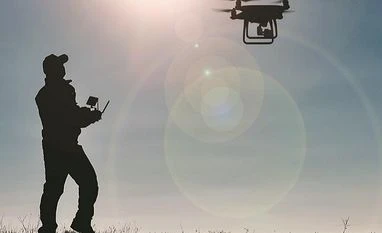 "Indian drone makers welcome govt's decision to ban import of drones")












 Connect with us on WhatsApp