
India needs forex reserves buffer to beat exchange rate volatility: Rajan
'We need this (foreign exchange) reserve buffer to insulate ourselves because we have no friends,' says former RBI governor
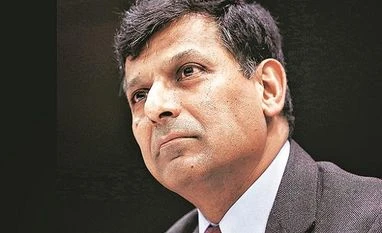 "India needs forex reserves buffer to beat exchange rate volatility: Rajan")
WebinarsNew
Deep DiveNew
Explore Business Standard
'We need this (foreign exchange) reserve buffer to insulate ourselves because we have no friends,' says former RBI governor
India needs foreign exchange buffer reserves to insulate itself from exchange rate volatility as we have "no friends" for swap lines and Japan was the only country that helped during the taper tantrum in 2013, former RBI Governor Raghuram Rajan on Tuesday.
Participating in a virtual event organised by economic think tank NCAER, Rajan said during the taper tantrum in 2013, India asked for swap lines, and only country who helped us was Japan.
"We need this (foreign exchange) reserve buffer to insulate ourselves because we have no friends. Even the European Union (EU) went to get swap lines from the Federal Reserve.
"We asked for swap lines, that is on public record, we did not get them. Only country who helped us during the taper tantrum was Japan," he said.
Taper tantrum refers to emerging markets facing inflation woes and other issues after the US Federal Reserve decided to put brakes on its quantitative easing programme in 2013. The programme was started to deal with the fallout of the 2008 global financial crisis.
"So when you have no external support, you have to build your own support, which is why we started building the reserve buffer," Rajan said, adding that what happened during the taper tantrum was a traumatic experience for many who went through it.
Rajan noted that he can't see an Indian government going to the IMF and say I need a contingent plan, even though, to the IMF's credit, it said frequently. "This should not be a source of stigma," he opined.
According to RBI data, the country's foreign exchange reserves swelled by USD 1.013 billion to touch a life time high of USD 610.012 billion in the week ended July 2.
"So broadly speaking, I would say, you can keep this regime at margins, but it worked for us.
"It is not the long term regime that we should have, hopefully as we build credibility for inflation targeting and we strengthen our institution, we can move away from it," the former RBI Governor said.
Rajan, currently a Professor at the University of Chicago Booth School of Business, also said that India has been trying to build macro prudential tools.
Stating that India moved into inflation targeting regime in 2014-15, he said, "When you try to reduce volatility then you do increase a variety of sources of moral hazards. One of the downside of intervention is it breeds more intervention".
The Reserve Bank of India (RBI) has the mandate to maintain retail inflation at 4 per cent with a margin of 2 per cent on either side. The central bank's six-member monetary policy committee (MPC) headed by RBI Governor decides on policy rates keeping this target in mind.
Rajan also said that ultimately a country can get rid of the need of managing the exchange rate in two ways.
"One is to build credibility for your inflation targeting and second is if your financial system and your access to the international capital market is unimpeachable and therefore people believe that movements in the exchange rate etc will not somehow impair your access.
"That also requires a different kind of credibility, straightening of the capital market institutions etc," he emphasised.
(Only the headline and picture of this report may have been reworked by the Business Standard staff; the rest of the content is auto-generated from a syndicated feed.)
First Published: Jul 13 2021 | 11:22 PM IST


 Connect with us on WhatsApp