
Indo-French nuclear deal: 10 yrs after inking, project still a non-starter
The 9,900 MW power plant that envisages to have six nuclear reactors of 1,650 MW each is slated to be the biggest nuclear power park in the country
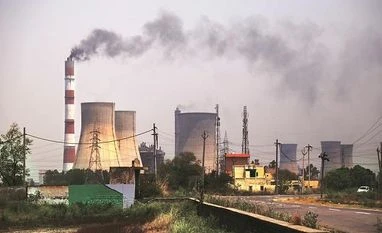 "Indo-French nuclear deal: 10 yrs after inking, project still a non-starter")
WebinarsNew
Deep DiveNew
Explore Business Standard
The 9,900 MW power plant that envisages to have six nuclear reactors of 1,650 MW each is slated to be the biggest nuclear power park in the country
A decade after its signing, the Indo-French nuclear deal has yielded little success in the power sector, but the pact has given India a headway in other areas like research, former top officials said.
The Indo-French cooperation on 'peaceful use of nuclear energy' was signed on September 30, 2008, primarily for building the Jaitapur Nuclear Power Plant (JNPP).
The 9,900 MW power plant that envisages to have six nuclear reactors of 1,650 MW each is slated to be the biggest nuclear power park in the country.
However, 10 years after signing the deal, the power project is still at negotiations. The deal was signed even before the Indo-US nuclear cooperation agreement was signed, the officials said.
The multi-billion project had met with a fierce opposition from the locals. In April 2011, one person was killed in police firing as protests against the proposed Jaitapur nuclear power plant turned violent with agitators setting ablaze a police station.
However, of the recent nuclear power sites earmarked for foreign reactors, except the Kudankulam nuclear power project, Jaitapur remains the only location that has seen completion of the land acquisition.
The plant also has necessary approvals from the Ministry of Environment and Forest (MoEF), said Sekhar Basu, the former chairman of the Atomic Energy Commission and Secretary, Department of the Atomic Energy, who superannuated this month.
"However, it has taken a longer time than expected," said R K Sinha, former chairman of the Atomic Energy Commission and Secretary, DAE.
The negotiations first began with French company Areva, but last year French utility company EDF took over its nuclear reactor business after the former faced financial issues.
So, the negotiations were redone, said Anil Kakodkar, former chairman of the AEC and DAE secretary at the time the Indo-French nuclear deal was signed.
After the EDF took over Areva, negotiations again restarted.
Basu said there have been several factors that were hindering the power plant, which includes the "reference plant".
A reference plant is a functional power reactor and the Areva had then cited a power reactor at Flamanville.
"That will only happen by 2020," Basu said.
Since Areva, and now EDF, was bringing in a new technology, the Atomic Energy Regulatory Board (AERB), the country nuclear watchdog, asked for a reference plant.
"They have to give a techno-commercial offer that is feasible and tariffs have to be viable," Basu added.
Tariff has been a key concern, Basu and Sinha said as it has to be within the acceptable limits before going ahead with the deal.
According to the DAE's response to Parliament, France supplied 300 metric tonnes of natural uranium ore concentrate from 2008-2010, a much-needed fuel for domestic reactors operating under optimum level till then.
Kakodkar, one of the key negotiators of the India's nuclear deal with the US and French, said the Indo-French deal also had delved into several research aspects.
Because of the deal, India could become a member to be a part of the ITER, an international nuclear fusion research and engineering mega project, due to backing of France, along with the US.
The deal also focussed on development and nuclear energy applications in fields like agronomy, biology, earth sciences.
More important has been France's support at international fora. Kakodkar said when India was negotiating with the International Atomic Energy Agency (IAEA) for India-specific safeguards for its nuclear reactors, France, along with the US and Russia helped create a "positive environment".
France has been a staunch supporter to India's bid in all four export control regimes -- the Nuclear Suppliers Group (NSG), the Missiles Technology Control Regime, Australia Group and the Wassenaar Arrangement.
First Published: Sep 30 2018 | 12:25 PM IST

